
Advert
Advert – scroll down

-
-
- No I do not support the draft code 5962
- Yes I do 290
- Not fully 328
-
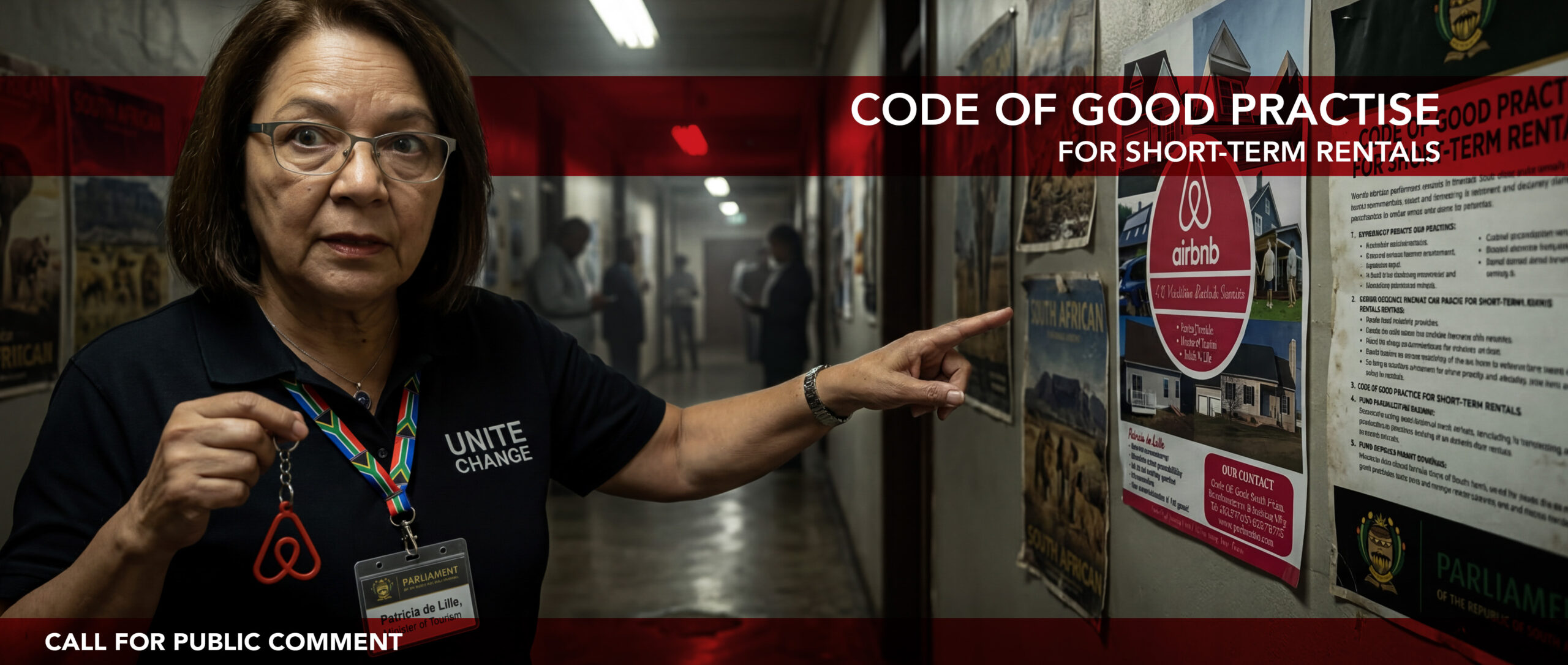
The Department of Tourism has gazetted a Code of Good Practice for Short-Term Rentals (STRs), framing it as a “non-binding” interim measure.
However, Minister Patricia de Lille has confirmed that this Code is the critical first step toward a total overhaul of the Tourism Act of 2014, which will introduce formal, mandatory regulations for the home-sharing economy.
-
- For Hosts: The move toward “commercial” reclassification could see your municipal rates double or triple. Plus, the threat of 90-day annual rental caps is now on the table.
- For Guests: Your privacy and your pocket are at risk. New mandates for data sharing and the rising costs of host compliance will likely mean higher booking fees and less choice for your next holiday.
This is your opportunity to shape the future of property rights and the tourism economy before these “guidelines” become the law of the land.
click the link for more info, or scroll down to have your say
Have your say – shape the code.

Top concerns
Risk of reclassification for commercial rates/levies, which will increase costs for both hosts and guests.
Concerns that “guidelines” will lead to 90-day annual limits on rentals, reducing choice for travelers.
The mandate for platforms to share guest identity and host data with government authorities.
The financial burden of mandatory commercial-grade safety equipment for small-scale stays.
Holding hosts and guests to “community norms” that may be inconsistently applied or lead to unfair evictions.
Reduced supply of affordable “home-away-from-home” options for local families.
Perspectives: What is the debate?
-
- Fair Competition: It levels the playing field between Airbnbs and traditional hotels/B&Bs that pay commercial rates and tourism levies
- Housing Availability: Regulating STRs prevents long-term rental stock from being depleted, making housing more affordable for locals.
- Safety & Quality: It ensures a minimum standard of safety (smoke detectors, insurance) for international and local tourists. Guests deserve the same safety and insurance protections in an Airbnb as they get in a 5-star hotel.
- Community Harmony: It gives residents and Body Corporates a framework to manage noise, parking, and security issues caused by transient guests.
-
- Privacy: Forcing guests to submit to government-tracked data sharing is a violation of privacy that will drive tourists to other destinations.
- Livelihood Threat: Many South Africans rely on STR income to pay their mortgages and survive the cost-of-living crisis; over-regulation kills this “side-hustle”.
- Property Rights: A homeowner should have the right to use their private property as they see fit without government-mandated caps on occupancy.
- Administrative Overkill: The requirements are too “corporate” for a simple room-sharing arrangement and will discourage new entrants.
- Privacy Risk: Forcing platforms to share personal data with the state is an overreach that risks the security of both hosts and guests.