Mass evacuation of SA townships on the cards to stop spread of coronavirus

Cape Town – Mass evacuation plans are at an advanced stage to possibly move tens of thousands of people across four provinces in South Africa.

Entire townships in the Western Cape, Gauteng, the Eastern Cape and KwaZulu-Natal are to be moved to safe zones in a bid to halt the spread of the coronavirus.

It is a plan to de-congest extremely dense informal settlements to prevent infection rates. In the Western Cape alone, thousands of residents from two informal settlements in Khayelitsha are to be temporarily removed.

The communities of Taiwan as well as eNkanini informal settlements have been notified of the plans to have them evacuated from their homes.

According to National Department of Human Settlements spokesperson, McIntosh Polela, these plans were already at an advanced stage.

“While this is urgent, it is also an initiative that requires a sensitive approach.”

While he could not confirm the number of people who would be removed from their homes, he said consultations would need to take place as many have historically refused to leave places common to them.

“Historically, our communities have resisted being moved. As such, we are careful that they are consulted and assured that they are going to be moved not far from the current place of their residence. We also cannot communicate some aspects of this initiative because of the ongoing consultations,” he said.

“Several communities in four provinces have been identified for the temporary relocations. The measure is aimed at mitigating the impact of the Covid-19 outbreak.

The department of human settlements is however not giving out the names of the identified communities, “because we do not want to cause unnecessary panic. We recognise that moving people from their homes can be stressful, hence we will allow for consultations to take place before giving this information publicly,” added Polela.

Land parcels have been transferred from the Department of Public Works and other state entities.

The evacuation plans come as the Minister of Health Zweli Mkhize announced that the number of Covid-19 deaths had risen to nine with 1505 infections countrywide. Two of the nine deaths were still being verified.

Three of these deaths occurred over the last 72 hours in St Augustine’s Hospital. This prompted Netcare and the local Department of Health to partially close the hospital after it was found that none of the patients had a history of recent travel, and hadn’t been in contact with anyone with the virus.

Eleven nurses at the hospital tested positive for Covid-19. Measures included the closure of the hospital’s emergency department and stopping all new admissions.

Speaking at a multi-ministerial press conference on Friday, Mkhize said protective gear for health care workers was on the way after government engaged several countries who manufacture the equipment.

This followed threat of legal action by unions to force the government to deliver the required gear for the workers who are on the front line of the Covid-19 battle.

Mkhize said on Friday authorities were talking to China, India and Germany to supply South Africa with protective gear.

“We have written letters to India, we are talking to China and there are suppliers in Germany. Cosatu and National Education, Health and Allied Workers’ Union (Nehawu) have raised the issue and we are engaging them,” said Mkhize.

Nehawu was late yesterday drafting papers to file at the high court on an urgent basis seeking an interdict on behalf of its members against unlawful and reckless exposure to occupational risk to their health and safety by the employer.

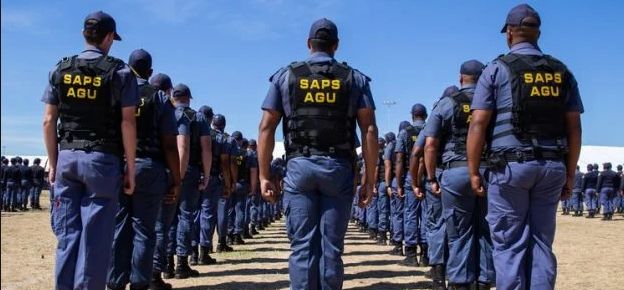
South Africa has now experienced a full week in lockdown and law enforcement agencies continue to act against citizens who are not abiding by the rules.

By Friday, the police had released 2005 people on a warning to appear in court. A total of 7450 fines had been issued and 124 people had been granted bail.

But even with the army and police clamping down on citizens who are not obeying the law, the executive mayor of the City of Johannesburg, Geoffrey Makhubo bemoaned the fact that many were finding ways around the lockdown.

“We have observed that many people are abusing the use of the permits granted to them, permits are not being used for the necessary essential services meant to be. There will be no tolerance to those misleading the law enforcement, people who are not complying will be arrested,” he said.

IOL

2 top French doctors said on live TV that coronavirus vaccines should be tested on poor Africans

  • Two highly respected French doctors discussed on live television how a potential new treatment against Covid-19 should be first tested in Africa, “where there are no masks, no treatment, nor intensive care”.
  • One of them, Jean-Paul Mira, even compared Africans to prostitutes who were the focus of previous Aids studies. “We tried things on prostitutes because they are highly exposed and do not protect themselves,” he said.
  • Several soccer stars of African origin, including former Chelsea star Didier Drogba and former Barcelona striker Samuel Eto’o, tweeted their outrage at the two medics’ remarks.

A discussion between two top French doctors on live TV left viewers horrified when they proposed that Africa should become a giant laboratory for coronavirus vaccines testing because the continent lacks the resources to defend against the infections.

In the segment broadcast on the on French TV channel LCI, Jean-Paul Mira and Camille Locht raised the idea of testing new vaccines on impoverished African populations.

Mira is head of the intensive care department at the Cochin Hospital in Paris, while Locht is research director at the French National Institute of Health and Medical Research (INSERM).

“If I can be provocative,” said Mira, “shouldn’t we do this study in Africa where there are no masks, no treatment, no intensive care? A bit like we did in some studies on AIDS. We tried things on prostitutes because they are highly exposed and do not protect themselves.”

Locht agreed, saying: “You are right. We are actually thinking of a parallel study in Africa to use with the same kind of approach with BCG placebos,” referring to vaccination against tuberculosis INSERM says has appeared to protect children against infections, particularly respiratory ones.

“We will in fact think seriously about it,” he said.

The footage, broadcast on April 1, triggered a deluge of outrage accusing the doctors of white colonial attitudes.

Several of Africa’s leading footballers, including former Chelsea star Didier Drogba and former Barcelona striker Samuel Eto’o, also tweeted their anger.

Drogba, who is from Ivory Coast, tweeted: “It is totally inconceivable we keep on cautioning this. Africa isn’t a testing lab. I would like to vividly denounce those demeaning, false and most of all deeply racists [sic] words.”

“Welcome to the West, where white people believe themselves to be so superior that racism and debility become commonplace,” tweeted Ba, who is from Senegal. “Time to rise.”

INSERM, ranked as the world’s second-best research institution in the health sector, issued an official statement on Twitter alleging the proposal had been “wrongly interpreted” and included as hashtag saying “#FakeNews.”

On April 2, there more than 6 700 confirmed cases and 229 deaths of the coronavirus in the entire African continent, with many countries imposing a range of prevention and containment measures against the spread of the pandemic, according to African health officials.

France, meanwhile, has logged 59 105 infections and 5 387 deaths.


Lockdown: Number of deaths from police action rises to 8 – surpasses SA’s Covid-19 casualties

Eight deaths have allegedly occurred at the hands of police since the start of the nationwide lockdown on 26 March, according to the Independent Police Investigative Directorate (IPID).

On Friday, IPID released a breakdown of the complaints they had received since the lockdown came into effect.

Six deaths came as a result of police action and the remaining two were in police custody.

The six deaths as a result of police action were recorded in Gauteng, KwaZulu-Natal and Western Cape, while the two deaths in police custody were both in Limpopo.

Assault cases

Thirteen assault cases have been lodged with IPID, as well as 13 cases of police discharging an official firearm.

There were also three cases of corruption by police officials, which were recorded in Gauteng, KwaZulu-Natal and Mpumalanga.

A total of 38 cases was lodged with IPID since the start of the 21-day lockdown.

Excessive force

On Tuesday, News24 reported that police were facing three counts of murder, allegedly as a result of excessive force. IPID are investigating.

In Langa, Cape Town, a man was allegedly shot dead by police after he charged at officers with a knife during a chase.

In another case, a man died after being tasered by police in the Western Cape while he was on a beer run.

The number of deaths due to the police’s actions has dramatically increased. It, in fact, surpasses the amount of deaths due to Covid-19 in the country, which currently sits at seven.

Article by News 24

All business essential during lockdown- IRR

The South African Institute of Race Relations (IRR) says the distinction of essential and non-essential business during the Covid-19 lockdown will cause more problems than solutions.

The organisation released its coronavirus policy recommendations to the government on Thursday.

CEO Frans Cronje said their research over the past couple of weeks shows that economic activity can continue while the country is on lockdown.

“Our advice is to do away with this distinction between health priorities and economic priority, implicit in that, the distinction between essential economic activity and other activity. Because if it proves impossible to get much of the South African economy back into operation as fast as possible, we expect that the pressure coming out of that will on people and households will see isolation protocols fail.”

Cronje added that economic regression will result in the same health crisis that the government is trying to avoid.

South Africans warned not to wear masks and gloves during lockdown

The Western Cape Health Department has warned South Africans against wearing gloves and masks during the 21-day lockdown, stating these items can actually help to spread the coronavirus.

In a statement, the department said personal protective equipment (PPE) such as masks and gloves are scarce and should be used by the appropriate people.

“Many people feel that they can protect themselves against COVID-19 by wearing personal protection equipment such as gloves and masks as a precaution,” the department said.

“If you are not ill and not in close contact with someone who has coronavirus, you do not need to wear a mask or gloves.”

The term “personal protective equipment” refers to a wide variety of protective items, including surgical face masks, N95 respirators, aprons, face shields or visors, goggles, and gloves.

This equipment is meant to be used when treating people who have an infectious disease, cleaning, or removing waste, the department said.

Higher risk of infections

“In general, PPE such as masks and gloves are only needed if you are in direct contact with or caring for a person who is confirmed or suspected to have COVID-19, at home or in a health facility,” the department said.

“Scientific evidence proves that by wearing a mask, if it is not needed, you may put yourself at higher risk because you fiddle with the mask and then transfer germs from your hands to your face.”

It added that wearing a mask and gloves when going to the supermarket or pharmacy to buy essentials during the lockdown period is unnecessary and will not protect you from the coronavirus.

Wearing this equipment in the belief that it will protect you when you are in public may result in the infection actually spreading faster, the department warned.

“The Health Department has developed clear guidelines for the general public. It advises the public to practice good hand hygiene, not touch your face, and to keep a distance of 1.5 metres from other people when you have to leave your home for essential items or medical care,” the department added.

“To reiterate, for the general public no PPE is needed.”

Confirmed cases

Minister of Health Zweli Mkhize announced on 29 March that the number of confirmed coronavirus cases in South Africa had risen to 1,280.

Additionally, Mkhize said that South Africa has suffered the second death of a patient who tested positive for the virus.

The deceased was a 74-year-old man who had been in ICU in a private hospital in Ladysmith. He had travelled to the Kruger National Park with his family and returned with flu-like symptoms.

“It has been reported to us that the deceased patient had an underlying skin cancer condition (melanoma), which had already complicated,” said Mkhize.

“The deceased’s family, 14 health workers, including 3 specialist doctors who were in contact with him, are now in quarantine and being monitored.”

Article by MyBroadband

When the virus crisis is over, the legal battles begin

While the Covid-19 outbreak carves a vein of destruction across the planet, companies worldwide are reviewing millions of contracts to assess whether they can plead force majeure – or an inability to perform due to the pandemic.

It’s a dead certainty that the courts will be clogged for years with cases arguing the limits of force majeure. Judges will be called on to separate the opportunists – those who had already defaulted on contract obligations which had nothing to do with the virus – from genuine cases of force majeure.

In most cases, companies will be able to plead force majeure as a justifiable reason for being unable to perform on a contract. The China Council for the Promotion of International Trade announced on January 30 that it would issue force majeure certificates, which will assist in legitimising any claims for contract non-performance due to force majeure.

The burden is on the party claiming force majeure to prove that the coronavirus falls within the contract wording and that non-performance was a result of the outbreak.

“It must also show there were no alternative means for performing its obligations and that it has taken all reasonable steps,” writes Liz Pinnock, head of legal at audit, tax and consulting firm RSM, in a recent article on force majeure.

Companies will be seeking to be excused from liability for non-performance, which in most cases will mean renegotiating the terms of the contract by, for example, extending timelines for delivery.

‘Impossibility’ needs to be proven

In a recent article, Justine Krige of Cliffe Dekker Hofmeyr says SA law does not excuse the performance of a contract in all cases of force majeure. “There are certain conditions that must be fulfilled in order for a force majeure to trigger the type of impossibility that extinguishes a party’s contractual obligations.”

She says these are:

  1. The impossibility must be objectively impossible.
  2. It must be absolute as opposed to probable.
  3. It must be absolute as opposed to relative (in other words, if it relates to something that can in general be done, but the one party seeking to escape liability cannot personally perform it, such party remains liable in contract).
  4. The impossibility must be unavoidable by a reasonable person.
  5. It must not be the fault of either party.
  6. The mere fact that a disaster or event was foreseeable, does not necessarily mean that it ought to have been foreseeable or that it is avoidable by a reasonable person.

While companies have highly-paid lawyers to protect their interests, individuals do not. When they apply for a bank loan, they sign an agreement drafted by the bank and heavily skewed in the bank’s favour. In such cases, debtors falling behind on their mortgage and car payments will be unable to plead force majeure, says consumer lawyer Leonard Benjamin.

Two sides to every contract

“Default [by a debtor] is purely a factual issue. Even a deceased person would be in default if their bank froze the account out of which payments were being made on being notified of the death. It’s not a question of blameworthiness. The main thing about a loan is that the lender will have performed fully by advancing the money so it falls only on the consumer to honour their side of the contract by repaying the loan.

“If, in an agreement between companies, the obligations under the agreement are reciprocal, one party’s performance is conditional on the other’s,” adds Benjamin. “A force majeure clause simply excuses the supplier’s performance but it will also prevent it from claiming that the consumer perform.

“A loan is different, as the bank would already have performed in full by advancing the funds.”

Banks risk massive reputational damage if they start pursuing customers through the courts for arrears brought about as a result of Covid-19, says Benjamin. However, any bank seeking an eviction against a homeowner will likely get short shrift from the courts, as judges are required to consider all the borrower’s circumstances – including loss of income due to the Covid-19 crisis – before granting an eviction order.

Banks are already coming under pressure for their “underwhelming” response to the Covid lockdown compared to the response in other countries.

Standard Bank’s response appears to be the most generous so far, offering short-term payment holidays for students and small businesses in good standing. The response from the other banks has been more of a “call us if you’re in trouble” approach, while governments elsewhere have made more decisive moves to protect borrowers.

Read: Rate cut not enough

The US has placed a freeze on foreclosures and evictions, while several other countries have announced or are planning to introduce debt repayment holidays for consumers in distress. The UK has announced a three-month payment holiday, and European banks are being pushed to offer similar forebearance.

Calls for decisive intervention

In SA, political parties and trade unions are calling for much more decisive intervention from the banks than the lukewarm response to the crisis so far.

National African Congress of Trade Unions (Nactu) and Lungelo Lethu Human Rights are among a growing number of groups calling for a total freeze on legal action related to debt recovery, particularly mortgage and car payments.

Cosatu wants across-the-board rather than piecemeal loan deferments.

The DA wants a four-month loan repayment holiday.

The EFF wants a payment holiday for a whole range of personal debts.

Nactu says government should invoke emergency powers to jail anyone pursuing legal action against mortgage borrowers and car owners until the economic crisis has stabilised, on the grounds that the country is facing an existential crisis.

US economist Michael Hudson says the massive debts accumulated over the last two decades can never be repaid and must be written off, as was done repeatedly in history. This would be the stimulus needed for an unprecedented economic recovery, he says.

Article by Moneyweb

Covid-19: ‘Unemployment benefits will not be extended to the informal sector’

Unemployment Insurance Fund (UIF) benefits will not be extended to cover workers in the informal sector in the wake of the national lockdown declared to curb the spread of the coronavirus.

This is according to Employment and Labour Minister Thulas Nxesi, who announced that a new national disaster benefit will be launched through the UIF by his department to mitigate the effect of the lockdown on workers’ pockets.

“The issue of the informal sector, the workers who are not registered with the UIF or the Compensation Fund, how will they be assisted? Unfortunately, from our side we [are not] able to deal with this matter, because it is beyond this particular legislation,” Nxesi said at an interministerial press briefing on Tuesday.

According to Statistics South Africa’s most recent quarterly labour force survey, there were almost three million workers in the informal sector at the end of 2019. This is almost 18% of the total employed workforce in the country.

On Tuesday, Nxesi said these workers will be assisted through the safety net announced by President Cyril Ramaphosa on Monday night.

“This is still a work in progress,” Nxesi said.

The minister provided more details on how the UIF will be used to help workers at companies that will have to shut down during the 21-day national shutdown.

Emergency personnel, health workers, the army and police, and companies involved in production of food and medicine will be declared essential service workers and will be exempt from the lockdown.

Millions of claims

Nxesi noted that “millions of workers that are going to be claiming from the UIF”. This means that the claims system will have to be decentralised.

To do this, the department has decided to advance the money to companies and bargaining councils to allow them to pay those employees, Nxesi said. There will be strict audits “after the big storm, so there is no abuse of the money”.

These benefits will be calculated on a scale, and will not be less than the R3 500 minimum wage.

“The administrative capacity we have at the moment never anticipated these huge numbers, which are likely to come,” Nxesi said. “But if the companies come to the party, the bargaining councils come to the party, we think that we will be able to deal with that influx.”

The Temporary Employee Relief Scheme — which is funded by the UIF to assist distressed companies through subsidies — will be “expanded and expedited”, Nxesi said. Companies will be able to draw from benefits through this scheme, provided they embark on turnaround programmes overseen by the Commission for Conciliation, Mediation and Arbitration.

Khayelitsha becomes first township to confirm COVID-19 case

The province is currently dealing with 310 coronavirus cases.

JOHANNESBURG – Khayelitsha has become the first township in the Western Cape to confirm a COVID-19 infection.

The province is currently dealing with 310 coronavirus cases.

South Africa’s only COVID-19 related death was recorded in Cape Town on Friday.

South Africa is worried about the coronavirus hitting its townships.

Western Cape Premier Alan Winde has now confirmed a person has tested positive for the virus in Cape Town’s largest township, Khayelitsha.

Thousands of families live in very close proximity to one another in the township and some households have as many as seven to 10 people living together, making social distancing difficult.

Water and sanitation is also a major problem, with many houses that still don’t have access and one block of communal toilets are shared between hundreds of residents.

Meanwhile, in the neighbouring community of Mitchells Plain, five people have tested positive.

This article first appeared on EWN : Khayelitsha becomes first township to confirm COVID-19 case

Tax relief proposed by president Ramaphosa

The address by resident Cyril Ramaphosa on Monday, 23 March 2020, set out certain fiscal relief measures to help small and medium enterprises (SMEs) and vulnerable firms mitigate cash flow
constraints as a consequence of the COVID-19 outbreak.

Certain of these measures will be implemented through the tax system and aim to use the tax system as a means of easing the liquidity constraints currently faced by businesses, notes the legal team at Webber Wentzel.

Specific detail on these measures will be published by National Treasury in the coming days. The law firm has provided a summary of the tax proposals set out in the address by the president below.

Support for businesses

Pay as you earn – SMEs with a turnover of less than R50 million:

  • may defer 20% of their prospective pay-as-you-earn (PAYE) liabilities over the next four months; and
  • may defer a portion of their provisional corporate income tax payments without penalties or interest over the next six months.

The deferral of provisional tax payments should apply to the first and second provisional tax payments as well as potentially the third top-up payment, Webber Wentzel said.

In order to qualify for these deferrals, the enterprise must be fully tax compliant. Enterprises can check their tax compliance status via SARS eFiling.

“We look forward to additional clarity around whether an application will need to be submitted to SARS or whether the relief applies automatically,” Webber Wentzel said.

Support for employers and employees

Employee Tax Incentive

Government has proposed an additional tax subsidy in the amount of up to R500 per month for the next four months per qualifying employee in the private sector.

The employment tax incentive (ETI) is paid to employers who employ qualifying employees (including the youth) and is considered a labour cost sharing mechanism between government and the private sector to incentivise employment.

The existing ETI is aimed at supporting qualifying employees who earn below R6,500 per month on a sliding scale based on salary where the employer is registered for Employees Tax.

The employer is entitled to reduce the total amount of its PAYE liability by setting off the ETI amount calculated in respect of that month.

Where there is no PAYE to set off against the ETI amount, the employer will be entitled to a reimbursement of the total ETI amount available as at the end of each PAYE reconciliation period.

A further proposal aims at reducing the reimbursement period to a monthly period, Webber Wentzel said.

“This will help over four million workers, while the South African Revenue Service (SARS) will work towards accelerating the payment of employment tax incentive reimbursements from twice a year to monthly, to get cash into the hands of compliant employers as soon as possible,” said Jana Botha, consultant, tax practice, Baker McKenzie Johannesburg.

Compensation Fund

Any employee who falls ill pursuant to exposure to Covid-19 at work will be entitled to claim from the Compensation Fund. Broadly speaking, claimants are required to include such compensation in their gross income for tax purposes.

The amount is, however, exempt from normal tax in accordance with section 10(1)(gB) of the Income Tax Act, the legal firm said.

UIF – Temporary Employee Relief Scheme

Government proposes utilising the Temporary Employee Relief Scheme (TERS) to enable companies to pay employees and avoid retrenchments. TERS was launched in December 2019 and is aimed at assisting businesses who face temporary constraints that will result in retrenchments.

The allowance will be in the form of a wage payment directly to employees, said Webber Wentzel.

“This should support SMEs and other vulnerable firms who are faced with a loss of income to provide support to workers.”

UIF and SDL

“Government is investigating a reduction in employer and employee contributions to the Unemployment Insurance Fund and a reduction in Skills Development Levies.”

The proposal entails using actuarial reserves in the Unemployment Insurance Fund to support workers of SMEs and vulnerable firms who are faced with loss of income and whose
employers cannot provide support,” Webber Wentzel said.

he Department of Small Business Development has made over R500 million available immediately – accessed via a simplified application process – to assist small and medium enterprises that are in distress.

Further, the Industrial Development Corporation has put together a package with the Department of Trade, Industry and Competition that provides more than R3 billion in industrial funding to aid vulnerable firms and to fast-track financing for companies that are critical to Government’s efforts to fight the virus and its economic impact, noted Baker McKenzie Johannesburg.

The Department of Tourism has also made an additional R200 million available to assist SMEs in the tourism and hospitality sector who are under particular stress.

Moody’s move SA to junk status

JOHANNESBURG – It’s official. South Africa has been junked.

The global Coronavirus outbreak wasn’t enough to stop Moody’s ratings agency from cutting the country’s sovereign credit rating to sub-investment grade.

The long-term foreign-currency and local-currency ratings have been lowered from Baa3 to Ba1.

Moody’s cites a continuing deterioration in fiscal strength and structurally very weak growth as their reason for the downgrade.

All three major ratings agencies have now moved South Africa to junk status.

Source
eNCA