These are the laws Cyril Ramaphosa says he will change to protect women in SA

President Cyril Ramaphosa has made an impassioned address to the nation on Thursday, as the presidency faces one of the biggest issues plaguing South Africa. Thousands of protesters demanded that swift action must be taken against rapists and those who commit femicide – and it seems Cyril is on the same page.

In a brief, informal address to demonstrators earlier in the day, Ramaphosa hinted that there would be sweeping changes to the law in order to give the women of South Africa a greater sense of safety. Many of his proposals will need to be debated in Parliament, and a majority are reactive rather than proactive.

Cyril Ramaphosa talks tough on gender-based violence

But nonetheless, this is progress. The reaction has been swift and Ramaphosa told crowds he agreed with their sentiments, stating that “enough is enough” when it comes to gender-based violence (GBV). His televised speech was a robust one, and there is plenty of legislation that could soon be amended.

What is more, you can thank the scores of protesters who marched to Parliament under the #AmINext banner to force the president’s hand on this one. Show us a more iconic image than this, please. We’ll wait:

Immediate actions to be taken by Cyril Ramaphosa and the government:

State of emergency
The first thing he did was relatively easy, and relies on the president’s executive powers. Ramaphosa has indeed called a state of emergency on gender-based violence. This will allow Parliament to address the matter quicker than usual, and more funding can be made available to implement measures aimed at keeping women safe in South Africa.

Women’s shelters
On Wednesday, we reported that France was trying to work out how to quell its own femicide problem. Around 0.12 women in every 100 000 are murdered in the European country each year. President Macron has announced that thousands more women’s shelters will be built, and Ramaphosa has vowed to do the same – even if he scrimped on the details.

Re-open all cases relating to gender-based violence
Ramaphosa is seeking justice, and he told the nation that all serious cases of gender-based violence that have been left unsolved or “gone cold” must be reconsidered by the relevant authorities. The president also punted the introduction of special courts to deal with gender-based violence – a proposal he intends to run by cabinet in the near future.

Laws that Cyril Ramaphosa and the government will seek to change
Harsher penalties for rapists and murders
Item one on the agenda for everyone concerned. The way these particular criminals are processed by the legal system is set for a major shake-up – if Cyril gets his way: He reiterated the calls he made earlier on Thursday to introduce harsher penalties against these perpetrators.

The president certainly didn’t mince his words, and subject to Parliamentary approval, the deterrents could be strengthened in the following ways:

Automatic life sentences for rapists and murderers, with the term “life” meaning exactly that, and not just a 25-year stretch.
Bail will be withdrawn from suspects in major cases.
Those found guilty could also have any chance of parole taken away from them.
Plough more funds in preventing femicide
Cyril confirmed he had asked Finance Minister Tito Mboweni to allocate more funds to fighting GBV. With the extra cash, Ramaphosa stated he wants an overhaul of rehabilitation programmes for criminals and a wholesale increase in where they are available. He also said that there will be “changes to the school curriculum” to educate young adults on issues like femicide and rape.

Emergency Parliamentary reviews
Two things to know here: It looks like Ramaphosa will consider cross-party contributions in trying to identify “emergency interventions” which can be implemented immediately. That “e-word” proved popular, as he also revealed plans to establish emergency response teams who specifically deal with crimes against women, children and minorities.

Naming and shaming those who commit crimes against women and children
There’s been a lot of clamour for this, and the president is ready to listen. Ramaphosa is making the bold decision to ensure both the Violence Against Women and Children Register and the Sex Offenders Register are officially made accessible to the public: It’s a move that is likely to draw the most controversy, though.

“We are going to modernise and overhaul the register of gender based violence. The register will be taken to Parliament for debate to make the names of those convicted public. I will also urge parliament to amend legislation so that the National Register of Sexual Offenders is made public, too.”

Cyril Ramaphosa


Articel by Tom Head and the South African

NHI bill is ‘constitutionally sound’, state law adviser tells parliament

The state’s top legal minds have given the proposed National Health Insurance bill their stamp of approval in terms of its constitutionality.

Acting chief state law adviser Ayesha Jahoor told MPs on Thursday that the bill complied with Section 27 of the constitution, which provides for everyone a right to have access to health care services, saying that the state should take reasonable legislative and other measures, within its available resources, to achieve the progressive realisation of these rights.

Jahoor said the bill, which her office certified as “constitutionally sound”, should be regarded as a measure to give effect to this right enshrined in the constitution. It also complies with SA’s international obligations.

“Parliament, in passing the proposed legislation, would not be acting capriciously or arbitrarily or in violation of rule of law, or in violation of any provision of the constitution, should it enact this bill,” said Jahoor.

She was appearing, alongside health minister Zweli Mkhize, before the National Assembly’s portfolio committee on health.

Mkhize was presenting the bill to MPs for the first time since it was tabled in parliament during the parliamentary recess three weeks ago.

The bill seeks to provide equal primary health care for all South Africans regardless of their employment and financial status – but it has drawn criticism from opposition parties and from some experts in the health sector who argue that South Africans should not be compelled to join the proposed scheme whether they wished to or not.

Its roll-out was expected to cost around R250bn a year.

The DA has already threatened to go to the Constitutional Court to stop the implementation of the bill should it become law.

DA leader Mmusi Maimane and the party’s spokesperson on health, Siviwe Gwarube, told journalists two weeks ago that the bill was not consistent with schedule 4 of the constitution in that it usurped the powers of provinces in the administration of public health care.

“If it doesn’t pass constitutional muster, I’m willing to go to whatever court there is in the land to fight this matter. Don’t undermine the powers of provinces, it’s expressed in the constitution. We cannot be passing laws that will not pass constitutional muster,” said Maimane at the time.

But Jahoor argued that the provisions of the bill were rationally connected to the objectives of providing sustainable and affordable universal access to quality health care services for all in the republic.

The intention of the NHI bill was to further comply with Section 27 and to comply with international obligations.

“The combined constitutional obligation of Section 27 of the constitution and the binding international obligations which must be given effect to motivate sufficiently for us the rationality of the bill,” she said.

She said the concurrent national and provincial legislative competence referred to in the constitution meant that both parliament and provincial legislatures are equally competent and may legislate on matters listed in schedule 4.

In this context, the drafters of the constitution foresaw a situation where there could be a conflict between national and provincial legislation regarding a matter listed in schedule 4.

The certification process that the bill undergoes entails checking the draft bill in respect of its compliance with the constitution, the rule of law and whether the government policy is properly reflected in the draft bill.

The office of the state law adviser is required to provide the cabinet with a legal opinion on legislation to be considered by it. After cabinet approval for the legislation’s tabling in parliament, the law advisers must either certify the legislation as being constitutionally compliant in their opinion, or provide parliament with a legal opinion which explains why the bill cannot be certified.

Article by ANDISIWE MAKINANA and Times Live

NHI fund will not be another Eskom, says health minister

Zweli Mkhize assured a hospital conference that the national health insurance fund won’t have the power to take risks or raise debts

National Health Insurance (NHI) will be rolled out in a manner that is affordable and will not pose the kinds of risks to the economy that state-owned electricity generator Eskom has done, health minister Zweli Mkhize said on Monday.

Eskom posted a net after-tax loss of R21bn for the year to March 31, and its debt currently stands at R440bn — double the current health budget.

NHI is the government’s policy for achieving universal health coverage. Its first piece of enabling legislation was tabled in parliament on August 8, paving the way for the establishment of a central NHI fund that will purchase healthcare services on behalf of patients, which are to be provided free at the point of care.

“It is a fallacy to postulate that the NHI will bankrupt the country. This will be an entity in terms of schedule 3 of the PFMA (Public Finance Management Act), which means unlike an entity like Eskom, it will not have the power to take risks and engage in raising debts and other speculative financial transactions.

Article by TAMAR KAHN and Business Day

Pensioners oppose prescribed assets plan

South Africa’s intentions to tap state workers’ pension funds to revive a struggling economy would be strongly opposed, the Sunday Times reports, citing a major trade group on pensions.

The state workers’ pension funds lobby group doesn’t trust government investing pension funds to bail out struggling state-owned companies such as utility Eskom Holdings, said Adamus Stemmet, spokesman for the Association of Monitoring and Advocacy of Government Pensions. The investments wouldn’t yield positive returns, Stemmet told the weekly.

The Public Investment Corporation, which manages about R2trn on behalf of state workers, is under pressure to adopt a mandate that includes economic growth rather than focus purely on financial returns.

Nest egg raid or tool for development? Your guide to prescribed assets

Appearing before Parliament on Thursday, President Cyril Ramaphosa called for a “broad and wholesome” discussion around prescribed assets, which could oblige retirement funds to invest in state-owned enterprises.

The term ‘prescribed assets’ refers to a policy where the state obliges institutions such as pension funds and insurance companies to invest a part of their funds in state institutions or bonds.

For detractors, prescribed assets are a way for the state to raid retirement funds to prop up unattractive investments, such as heavily indebted state-owned entities. They warn that obliging funds to invest could artificially distort the market by diverting funds away from more appealing investments.

For supporters, the requirement to invest in specific state institutions or bonds is a quick way to boost the flow of funds to important entities, which can help grow the economy and create jobs.

2. Why are they in the news now?

The ANC resolved at its 2017 national at Nasrec – where Ramaphosa was elected ANC president – to investigate a “new prescribed asset requirement” to ensure that a “portion of all financial institutions’ funds be invested in public infrastructure, skills development and job-creation”. This call was renewed in its 2019 election manifesto.

The inclusion of the resolution – one of many in the party’s 2017 report – was an important new development. While prescribed assets had been floated in the past, there had not been serious moves to investigate their reintroduction after the apartheid-era Act on Prescribed Assets was done away with in 1989.

In June 2013, for example, in response to a Parliamentary question, then-Minister of Finance Pravin Gordhan said it was “not government policy to tell pension funds how to invest”.

Prescribed assets were not mentioned in resolutions from the ruling party’s 2012 Mangaung conference or in its 2014 election manifesto.

3. Does the government have an official prescribed asset policy?

No. This is why the ANC’s 2019 election manifesto is referred to so often.

In a speech before Parliament on Thursday, President Cyril Ramaphosa called for a “broad and wholesome” discussion around the issue.

Ramaphosa said the question should be how “various resources in SA” could be utilised to “generate growth in a purposeful manner”.

“In the end we will pursue policies that advance the interest of our people here in South Africa and also advance the interest of pension fund holders,” he said.

Opposition party the DA, in response, said that Ramaphosa’s answer was the “closest we have yet come to an official confirmation that asset prescription will be introduced.”

“This is an unacceptable and reckless policy proposal, shamefully taken straight from the apartheid government policy playbook,” said DA MP and the party’s spokesperson on finance, Geordin Hill-Lewis.

4. What are asset managers and economists saying?

Janina Slawski – principal investment consultant at Alexander Forbes Investments – noted in a report in June that if investors have to invest in specified assets, this will generally lead to “sub-optimal” investment outcomes.

Investors won’t be able to negotiate better terms for investment or “walk away” if they don’t think terms are favourable, she said.

“The introduction of prescription and the potential reduction in investment returns would leave members poorer, contrary to the positive changes achieved to date through the Retirement Reform initiatives,” Slawski warned.

“Trustees of retirement funds have a fiduciary duty to act in the best interest of members, and prescribed assets will limit the extent to which trustees can fulfil these roles.”

Slawski said that there should be a process of extensive consultation before requirements for the prescription of assets are enforced through legislation.

Magda Wierzycka, the CEO of Sygnia, said earlier in the year that prescribed assets were a “blunt instrument”.

She said that while they could fill the “immediate gap in the funding of bankrupt SOEs”, they would also “divert investments away from the funding of corporates that create jobs and contribute to growing the economy”.

“It will also affect the revenue derived from the taxation of such corporates, so what is taken to fill one bucket empties another,” she said.

Investec chief economist, Annabel Bishop, in a report released in July, said the prescription of assets could have implications for government debt and the country’s credit rating.

“A prescribed asset policy is dangerous in an environment where government and SOE finances have been materially deteriorated, as pensioners can risk losing their pensions, especially if further financial deterioration occurs,” Bishop warned.

“The persistence of pursuing prescribed assets as a government policy should be examined, as such a policy could have unintended consequences over and above that of further expanding SOE and state debt, and so engendering a credit rating downgrade for the country from Moody’s,” she added.

5. When will we have clarity?

With government calling for more discussion, and no policy papers out yet, it is too early to say, how, when, or if the state will proceed with prescribed assets.

ANC Alliance partner Cosatu has said that, in principle, both public and private funds should be required for investment in government bonds for the development of the state, with the caveat that there should be conditions attached to the investments to prevent looting and ensure depositors are protected.

Old Mutual, meanwhile, has said that the “devil certainly will be in the detail”.

“The definition of prescribed assets and the practical implementation thereof will be crucial to assure South Africa’s savers that their savings will remain secure. Until we have more clarity, we at Old Mutual Corporate Consultants do not believe that there is any reason to panic.”

Articel by News 24

Special advisor to the president answers 6 burning questions about the new NHI in South Africa

Dr Olive Shisana, the social policy special advisor to president Cyril Ramaphsoa, has addressed some of the key issues around the incoming National Health Insurance (NHI).

Shisana said that the NHI will not require mass sums of money, as some critics have claimed, and that any additional taxes will be far lower than medical aid premiums.

The public health specialist has also commented on questions around the potential for corruption within the new bill.

Shisana moved to answer several questions raised by think tank, the Institute for Race Relations (IRR) after the bill was published earlier this month.

How will it be funded? 

The IRR has stated that current costs for healthcare in South Africa exceed R450 billion, based on both public and private healthcare spending – for true universal healthcare, costs could at least amount to that.

Shisana said that the cost of NHI will require an additional R33 billion a year by 2025/26, and at most R55 billion over and above the R220 billion currently spent in the public health sector.

“This is because the state is already spending on the provision of comprehensive services in several facilities, however, there are gaps that need to be filled to optimize the services,” she said.

“The demand that the NHI Bill should indicate costs is unfair because costs change over time.”

A director-general in the Department of Health, Shisana said that the scheme will be funded by:

  • General tax revenue;
  • Reallocation of funding for medical scheme tax credits;
  • A payroll tax (employer and employee);
  • A surcharge on personal income tax.

“Only the minister of finance can pronounce on taxes, not the ministry of health. Therefore, it will be unconstitutional to indicate the tax levels in a health bill,” she said.

However, she said that the notion that the NHI needs large sums of new money is unfounded.

“The assumption made is that the NHI will not build on the current budget. What is expected to happen to the current budget?

“The additional tax will be far lower than the current amount paid on medical aid premiums. NHI will introduce efficiency gains that will expand health care to all,” she said.

What benefits will it cover?

The NHI Bill is not expected to provide an itemised list of thousands of services that will be provided, Shisana said.

“The services will be comprehensive. The state currently provides comprehensive services.”


Will the emigration of doctors impact the NHI? 

Shisana said that the migration of doctors is a global phenomenon and not limited to South Africa. “We value our health professionals and want to retain them,” she said.

“The health professionals are committed to improving this health system. This is why we involved them in designing the blueprint for improving the health system.

“Just like we have managed to get consensus with them on the Presidential Health Compact, we will find a fine balance that ensures their practice is sustainable while they provide quality services to all.”

Shisana said this is enforced in the NHI Bill which requires that services contracted should include both quality and acceptable price.

Will the health sector be able to administer the NHI?

The assumption that problems with the management of some of the state-owned entities (SOEs) will automatically transfer to the NHI Fund is incorrect, said Shisana.

“Many public entities are functioning very well, such as the Medical Research Council, Council for Industrial Scientific Research, National Research Foundation, and Council of Geoscience, Water Research Commission,” she said.

“They obtain unqualified audits, some of them clean audits. To assume that because Eskom, Prasa, Denel had problems, therefore, NHI will have a problem is not founded.

“This is because NHI will not be a state owned entity, but more of a public entity that operates under the Public Finance Management Act, audited by the auditor general.”

Shisana said that the NHI will also be much simpler to administer than medical schemes as the payment mechanisms are streamlined.

While medical aid requires submission of individual claims, the NHI Fund pays providers a capitation rate, which is a flat amount per person served by that provider, which may be adjusted for factors that affect the need for health services (such as age), the specialist said.

“The cost of administering NHI at national and regional levels is calculated at less than 2% compared to 10-12% in medical schemes on average.

“All the administrative savings that NHI Fund gains as a result of changing the payment mechanisms will be applied to improve the quality and quantity of the health services.”

Shisana said that the NHI will also pay hospitals using a fixed amount based on the diagnosis of the patient rather than on the basis of itemised fee-for-service bills.

“Instead of each patient submitting an individual claim, the hospital will submit a single consolidated claim, at the end of the month, listing the patients treated and their diagnoses,” she said.

“The NHI Fund, similar to the tried and tested United States Medicare, will use the Diagnostic Related Grouping (DRG), which categorises hospitalisation costs and determine how much to pay for a patient’s hospital stay.”

How will corruption be curbed?

Shisana acknowledged that corruption exists in both the public and private sectors, and that it needs to be rooted out and prevented while perpetrators are prosecuted.

“The presidential health Compact signed by the president, the minister of health and key stakeholders in health including the health professionals, labour, business and civil society has called for setting up a particular anti-corruption unit in the Department of Health,” she said.

“This unit will be backed by the Health Sector Anti-corruption Forum which includes the SIU, Corruption Watch, Section 27, NDOH, Hawks, Financial Intelligence Center, NPA, Council of Medical Schemes, etc.

“This latter body will ensure that a risk engine is established to detect and prevent corruption of the NHI Fund and use special court tribunals to try suspects. These measures will go a long way to deal with this scourge.”


Why are medical schemes being so drastically limited?

For NHI to be affordable, efficient and equitable, it needs a national resource pool that will be used to provide health services to all, said Shisana.

“This is an instrument to end the race, class, gender divisions that continue to plague South Africa. For example, 76% of medical scheme members are white, and only 10% are black africans.”

She said that if medical schemes are allowed to offer the same services as NHI, most of the specialists, doctors, dentists, and allied health professionals will simply provide care to the mostly white people and leave black African people with under-resourced providers.

“This maldistribution of human resources is at the root of the health care crisis,” Shisana said.

Article by BusinessTech

Government must look at using pension funds to generate growth: Ramaphosa

South Africa should investigate using worker pensions to fund finance development and infrastructure projects, president Cyril Ramaphosa said on Thursday.

Speaking in a parliamentary Q&A session on Thursday (22 August) Ramaphosa said that the proposal had the backing of the Congress of South Trade Unions(Cosatu), Reuters reported.

“We need to discuss this matter (prescribed assets) and we need to discuss it with a view to actually saying what is it we can do to utilise the various resources in our country to generate growth in a purposeful manner,” Ramaphosa said.

“We are facing a situation where our developmental needs are enormous, and in a number of other places pension funding is utilised for developmental purposes, for infrastructure and quite often those pension funds make good returns out of infrastructure developments.”

In an interview with the Sunday Times earlier this week, a top ANC official said the party is looking at the possibility of using private and public pension funds to rescue the country’s struggling state-owned enterprises.

Enoch Godongwana, head of the party’s economic transformation subcommittee, said that the asset management industry currently has R6 trillion under management which should be borrowed by government.

Godongwana said using this approach to gather funds is better than going the International Monetary Fund (IMF) for a bailout.

“Why would you go to the IMF and the World Bank and go and raise money when we have sufficient savings in the economy which you can borrow, probably far cheaper, and probably with little exchange rate risk?”

Godongwana added that while the ANC is also currently investigating the use of prescribed assets, this is separate from raising money through pension funds.

“Borrowing from domestic markets is not prescribed assets, that is a separate investigation,” he said.

In its election manifesto published in January 2019, the ANC announced that it planned to investigate the introduction of prescribed assets on financial institutions’ funds to ‘unlock resources for investments in social and economic development’.

Article by Business Tech

Draft by-law to prohibit undesirable conduct on beaches ‘doesn’t make sense’

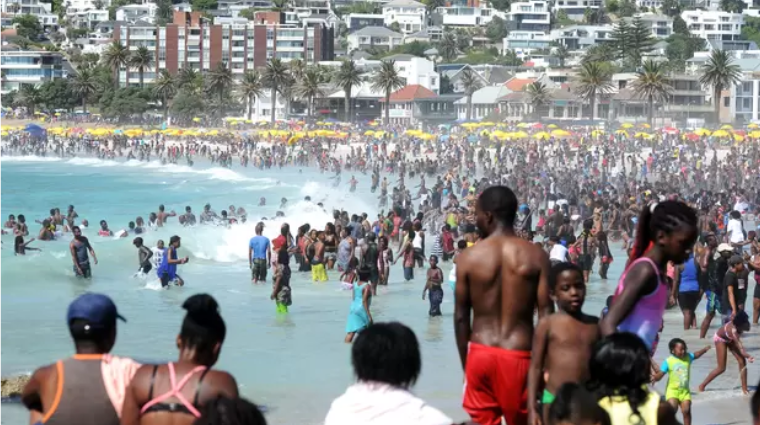
Cape Town – The City of Cape Town’s draft coastal by-law has Capetonians questioning how it would be implemented and pointing out that pre-existing by-laws need better enforcing.

The proposed by-law seeks to prohibit undesirable conduct, which includes that no person may in the coastal zone indecently expose their body, perform an indecent act or use foul language. It also states that no person may behave in an improper, indecent, unruly, violent or antisocial manner or cause disturbance.

It also gives the City more power over coastal facilities, including beaches, pools, promenades, showers, toilets, pavilions and tidal pools. It states that the City may regulate the number of people entering and using a coastal facility.

The City’s Mayco member for spatial planning and environment, Marian Nieuwoudt, said: “The intention of the by-law is not to be punitive with regard to foul language, but rather to create provisions that will enable the City’s law enforcement officers to intervene when necessary and to prevent any person from being verbally abused in public spaces on our coastline.”

She said it was to ensure that the public’s right of access to, and use of beaches as public spaces, was entrenched.

“The draft by-law is intended to create safer and cleaner beaches, free from litter and pollution, to protect sea life, improve safety and enforce the public’s right to access and enjoy beaches and sea indefinitely.”

Residents have weighed in, criticising some saying aspects presented in the proposed by-law “won’t work”.

Thabang Malebese: “No, it’s just stupid, they going to hire cops to sit and wait for someone to swear?”

Denise Thompson Schmidt: “There are many many other laws needing one could implement!”

Nicole L Jacobus: “More by-laws but nobody to police it doesn’t make sense. You just about see a law enforcement officer or metro police in our communities. Who comes up with these silly ideas… Already officials can’t even police cars parking on pavements where blind people walk. What a damn joke. When you call officials for people dumping they come three hours later so unfortunately this new by-law won’t work. Take the money, time and effort and strategise how we can get more passionate officers into the communities rather.”

Cynthia Bredenkamp: “Lol, is this the job creation Ole Pinocchio was talking about?? Because for just about every person on the beach you are going to need a monitor.”

Lynn Govender: “What BS.”

Chris Sebastians: “Another bylaw that no one will be able to police or successfully prosecute.”

Martin Badenhorst: “When the city council need to make money cause they have to drop water tariffs and water restrictions. So pathetic. Makes me want to go to the beach just to swear.”

Neilan Adams: “Insane. Too often people want their bread buttered both sides. Anti-poor? So you are saying the poor are foul-mouthed and ill-mannered?”

Aasiyah Adams: “When we at the coast, we will upload posts with foul language and our bikinis to your Facebook page and tag you with our location. It will make us feel better.”

Articel from IOL

Jail time for lying on CVs

Johannesburg – President Cyril Ramaphosa has signed into law tough new rules criminalising the submission of fraudulent qualifications or misrepresentation of education credentials.

Job seekers and prospective students who submit fraudulent qualifications or misrepresent them will now face up to five years in prison in terms of the National Qualifications Framework (NQF) Amendment Act 2019.

SA Qualifications Authority (Saqa) chief executive Joe Samuels told Independent Media on Tuesday that Ramaphosa signed the Act into law last Tuesday. The new law was published in the Government Gazette on Monday. According to Samuels, Saqa, which is responsible for advancing the NQF objectives, will study the Act and look very seriously parts that can be implemented immediately and do preparatory work for other aspects of the new law.

The Act is expected to come into effect on a date determined by Ramaphosa by proclamation in the Gazette and its provisions may have different commencement dates.

Five-year sentences, unspecified fines or both will be handed to people found guilty of making false entries in the national learners’ records database or are party to the falsification, dissemination or publication of a qualification or part-qualification of any person. Owners of bogus education institutions will also face jail time for awarding fraudulent qualifications.

”A person, an education institution or sk ills development provider is guilty of an offence if a person, the education institution or skills development provider claims to be offering a qualification or part-qualification registered on the NQF whereas that qualification or part-qualification is not so registered,” reads the statute.

Jail time also looms for those who falsely or fraudulently claim to be holding qualifications or part-qualifications registered on the NQF or awarded by an education institution, skills development provider, quality council or obtained from a lawfully recognised foreign institution.

The Act also provides for the establishment of a separate register of misrepresented or fraudulent qualifications or part-qualifications, which is expected to be published periodically and act as a deterrent. Local and foreign education institutions, their directors or board members falsely claiming to be registered and accredited may be ordered to close and be declared unfit to re-apply and re-register in the country or offer any qualification or part-qualification for a period not exceeding 10 years.

All organs of state, employers, education institutions, skills development providers and quality councils will be required to authenticate, before appointment or registration, all qualifications or part- qualifications presented to them for hiring or study.

There are three quality councils in the country and they are sector-based structures responsible for the development and quality assurance of qualifications. The Council on Higher Education is the quality council for the Higher Education Qualifications Sub-Framework, Umalusi (general and further education and training qualifications sub-framework) and the Quality Council for Trades and Occupations, which is responsible for the occupational qualifications sub-framework.

Article by LOYISO SIDIMBA and IOL

Draft by-law to prohibit undesirable conduct on beaches ‘doesn’t make sense’

Cape Town – The City of Cape Town’s draft coastal by-law has Capetonians questioning how it would be implemented and pointing out that pre-existing by-laws need better enforcing.

The proposed by-law seeks to prohibit undesirable conduct, which includes that no person may in the coastal zone indecently expose their body, perform an indecent act or use foul language. It also states that no person may behave in an improper, indecent, unruly, violent or antisocial manner or cause disturbance.

It also gives the City more power over coastal facilities, including beaches, pools, promenades, showers, toilets, pavilions and tidal pools. It states that the City may regulate the number of people entering and using a coastal facility.

The City’s Mayco member for spatial planning and environment, Marian Nieuwoudt, said: “The intention of the by-law is not to be punitive with regard to foul language, but rather to create provisions that will enable the City’s law enforcement officers to intervene when necessary and to prevent any person from being verbally abused in public spaces on our coastline.”

She said it was to ensure that the public’s right of access to, and use of beaches as public spaces, was entrenched.

“The draft by-law is intended to create safer and cleaner beaches, free from litter and pollution, to protect sea life, improve safety and enforce the public’s right to access and enjoy beaches and sea indefinitely.”

Residents have weighed in, criticising some saying aspects presented in the proposed by-law “won’t work”.

Thabang Malebese: “No, it’s just stupid, they going to hire cops to sit and wait for someone to swear?”

Denise Thompson Schmidt: “There are many many other laws needing one could implement!”

Nicole L Jacobus: “More by-laws but nobody to police it doesn’t make sense. You just about see a law enforcement officer or metro police in our communities. Who comes up with these silly ideas… Already officials can’t even police cars parking on pavements where blind people walk. What a damn joke. When you call officials for people dumping they come three hours later so unfortunately this new by-law won’t work. Take the money, time and effort and strategise how we can get more passionate officers into the communities rather.”

Cynthia Bredenkamp: “Lol, is this the job creation Ole Pinocchio was talking about?? Because for just about every person on the beach you are going to need a monitor.”

Lynn Govender: “What BS.”

Chris Sebastians: “Another bylaw that no one will be able to police or successfully prosecute.”

Martin Badenhorst: “When the city council need to make money cause they have to drop water tariffs and water restrictions. So pathetic. Makes me want to go to the beach just to swear.”

Neilan Adams: “Insane. Too often people want their bread buttered both sides. Anti-poor? So you are saying the poor are foul-mouthed and ill-mannered?”

Aasiyah Adams: “When we at the coast, we will upload posts with foul language and our bikinis to your Facebook page and tag you with our location. It will make us feel better.”