

- No I do not support the regulations 905
- Yes I do 541
- Not fully 1982
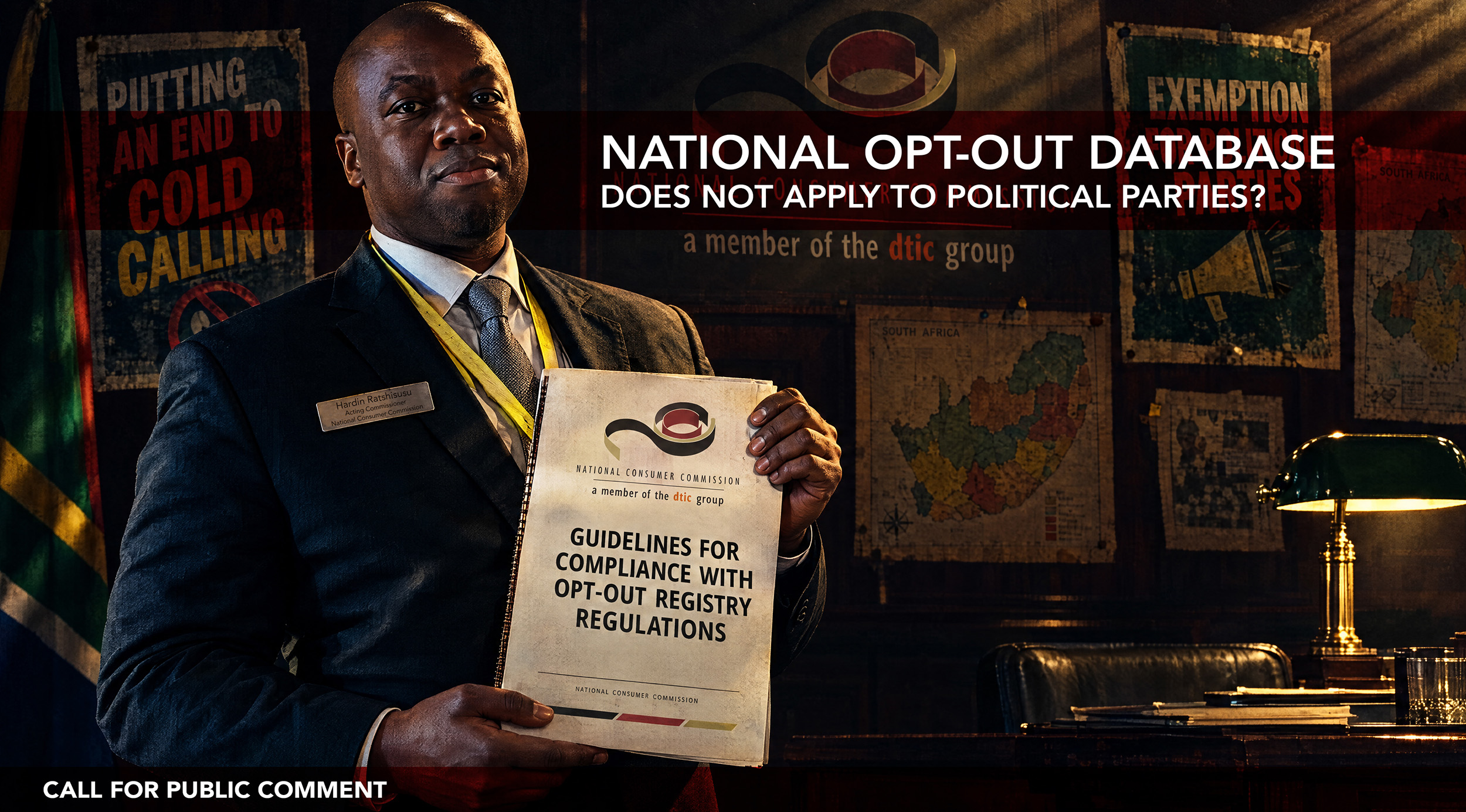
The National Consumer Commission (NCC), an entity of the Department of Trade, Industry and Competition (dtic), has gazetted the Draft Guidelines for Compliance with Opt-Out Registry Regulations..
Unsolicited telemarketing calls, spam SMSs, and automated robocalls interrupt millions of South Africans every single day. For years, consumers have demanded a binding, centralised system to permanently block marketing harassment.
On 2 October 2026, the National Consumer Commission (NCC) published draft guidelines under the Consumer Protection Act (CPA) to operationalise South Africa’s first mandatory National Opt-Out Registry. Under the proposed framework, direct marketers will be legally prohibited from contacting any citizen who registers a pre-emptive block. Companies that violate your opt-out face investigation, administrative fines from the National Consumer Tribunal, and criminal prosecution carrying up to 12 months imprisonment.
However, the draft rules contain critical loopholes and heavy administrative burdens.
click the link for more info, or scroll down to have your say
Where Do You Stand?
🟢 I SUPPORT the draft guidelines as published
(Backs the immediate rollout of the National Opt-Out Registry, mandatory monthly database cleansing, strict criminal penalties of up to 12 months for non-compliant telemarketers, and a centralised statutory barrier against unsolicited direct marketing.)
🔴 I OBJECT to the draft guidelines in their current form
(Rejects the exemption granting political parties free rein to spam citizens for votes, the inclusion of charitable donation requests under commercial marketing rules, the recurring 12c monthly cleansing fee on small businesses, and the procedurally unfair 15-day comment window.)
🟡 I SUPPORT WITH AMENDMENTS / NOT FULLY
(Supports establishing a binding national opt-out registry to halt nuisance marketing calls, but demands the removal of political party exemptions, complete fee exemptions for registered NPOs and community charities, lighter compliance burdens for SMMEs, and the protection of voluntary, direct consumer opt-ins.)
Have your say – shape the regulations.

Top concerns
-
- What the Guidelines Propose:
FAQ 16 provides that political organisations campaigning for votes do not constitute “direct marketing” under the CPA because their purpose is to solicit political support rather than offer goods or services. They only fall under registry obligations if they solicit donations from individuals or small juristic entities. - The Civic Risk:
This creates a blatant double standard. Political parties will remain free to use automated robocalls, mass SMS blasts, and unsolicited phone campaigns to push election messaging onto citizens’ private devices without having to respect registered opt-out blocks.
- What the Guidelines Propose:
Submission Demand:
The guidelines and CPA regulations must apply privacy protections equally. Any unsolicited electronic communication directed at a consumer’s private device—including political campaigning—must respect the National Opt-Out Registry.
-
- What the Guidelines Propose:
Non-Profit Organisations (NPOs) are not excluded from the registry. Under the CPA definition of direct marketing, any approach made to request a donation is deemed direct marketing. - The Civic Risk:
Community charities, animal shelters, disability groups, and religious outreach missions will be treated identically to aggressive commercial telemarketers. If an NPO sends an email appeal or calls past donors to request funds, it must first register with the NCC and pay monthly scrubbing fees, diverting scarce donor funding toward bureaucratic compliance.
- What the Guidelines Propose:
Submission Demand:
Genuine Public Benefit Organisations (PBOs) and registered NPOs must be granted a statutory exemption from registry fees and cleansing requirements when communicating with existing donors and supporters.
-
- What the Guidelines Propose:
Every business engaging in direct communication must register on the NCC registry portal, renew registration annually, and submit its consumer contact list online every single month that it intends to market. Marketers must pay a fee of 12 cents per registered entry, and the cleansed list is valid for only 30 days. - The Civic Risk:
While 12 cents per record seems nominal for major banks, telecommunications giants, and insurance conglomerates, it creates a recurring financial barrier for small, micro, and medium enterprises (SMMEs) and sole proprietors. A local business communicating monthly with a modest subscriber base faces ongoing administrative red tape and compounding expenses merely to send routine marketing updates.
- What the Guidelines Propose:
Submission Demand:
Introduce a tiered compliance threshold exempting micro-enterprises and sole proprietors (e.g., turnover under R2 million) from monthly cleansing fees, and extend the list validity period from 30 days to 90 or 180 days.
-
- What the Guidelines Propose:
Section 12.3 states that “fresh consent does not override a pre-emptive block, unless the consumer has removed such pre-emptive block” directly on the state registry. - The Civic Risk:
If a consumer places a general block on the national registry to stop aggressive telemarketers, but subsequently enters a store, visits a local market, or signs up online to receive a weekly newsletter from a brand they love, the business cannot legally contact them. The consumer’s explicit, informed consent is rendered legally invalid unless they log onto the government system to manually adjust their profile.
- What the Guidelines Propose:
Submission Demand:
The guidelines must recognise documented, verifiable, post-block express consent (opt-in) between an individual consumer and a specific vendor without requiring the consumer to navigate an administrative state portal.
-
- What the Guidelines Propose:
The Acting Commissioner gazetted the draft guidelines on 2 October 2026, granting the public and affected industries just 15 calendar days to deliver written comments, closing on 17 October 2026. - The Civic Risk:
A 15-day consultation window on a complex, nationwide regulatory framework affecting consumer privacy, small businesses, digital marketers, and civil society fails to satisfy the requirements of meaningful public consultation under the Promotion of Administrative Justice Act (PAJA).
- What the Guidelines Propose:
Submission Demand:
The NCC must immediately publish an extension notice granting a minimum 30- to 60-day public comment window to allow comprehensive stakeholder input.
-
- What the Guidelines Propose:
The compliance framework relies on businesses voluntarily registering, submitting their lists, paying fees, and displaying identifying particulars under Section 11.2. - The Civic Risk:
Compliant, legitimate local businesses will carry the financial and administrative costs of regulation, while the most predatory telemarketers—unregistered lead generators, VoIP number-spoofers, offshore crypto boiler rooms, and illegal call operations—will ignore the registry entirely.
- What the Guidelines Propose:
Submission Demand:
The NCC and ICASA must pair the registry with strict carrier-level telecommunications filtering, rigorous enforcement against illegal VoIP routing, and aggressive prosecution of domestic lead-generation syndicates.
Perspectives: What is the debate?
-
- Statutory Opt-Out Registry
Replaces the voluntary, toothless industry list with a centralised, state-administered statutory registry with real enforcement powers. - Enforcement & Penalties
Enforces accountability by backing registry blocks with National Consumer Tribunal administrative fines and criminal penalties of up to 12 months imprisonment. - 12-Cent Cleansing Fee
Shifts the operational cost of privacy protection onto commercial direct marketers who profit from consumer databases, sparing taxpayers. - Political Campaigning
Political participation and democratic canvassing are constitutionally protected activities distinct from commercial sales pitches. - NPO / Charity Inclusion
Financial solicitations are invasive regardless of who initiates them; consumers deserve protection from aggressive donation requests. - Fresh Consent Restrictions
Prevents unscrupulous corporate marketers from tricking consumers into signing away their opt-out block via buried contract clauses.
- Statutory Opt-Out Registry
-
- Statutory Opt-Out Registry
South Africa already enacted an opt-in model under POPIA Section 69; introducing a parallel CPA opt-out mechanism creates legal ambiguity and administrative conflict. - Enforcement & Penalties
Threatening small business owners with criminal records and prison sentences over administrative marketing list errors is disproportionate and heavy-handed. - 12-Cent Cleansing Fee
Imposes an ongoing, compounding monthly financial drain on small businesses and non-profits that lack the budgets of massive corporations. - Political Campaigning
Carves out a self-serving loophole for politicians to inundate citizens’ phones during election cycles while everyday citizens cannot opt out. - NPO / Charity Inclusion
Starves community non-profits by treating charitable funding appeals identically to predatory corporate telemarketing schemes. - Fresh Consent Restrictions
Paternalistically invalidates a citizen’s explicit decision to subscribe to updates from a specific brand or local business.
- Statutory Opt-Out Registry