
Advert
Advert – scroll down
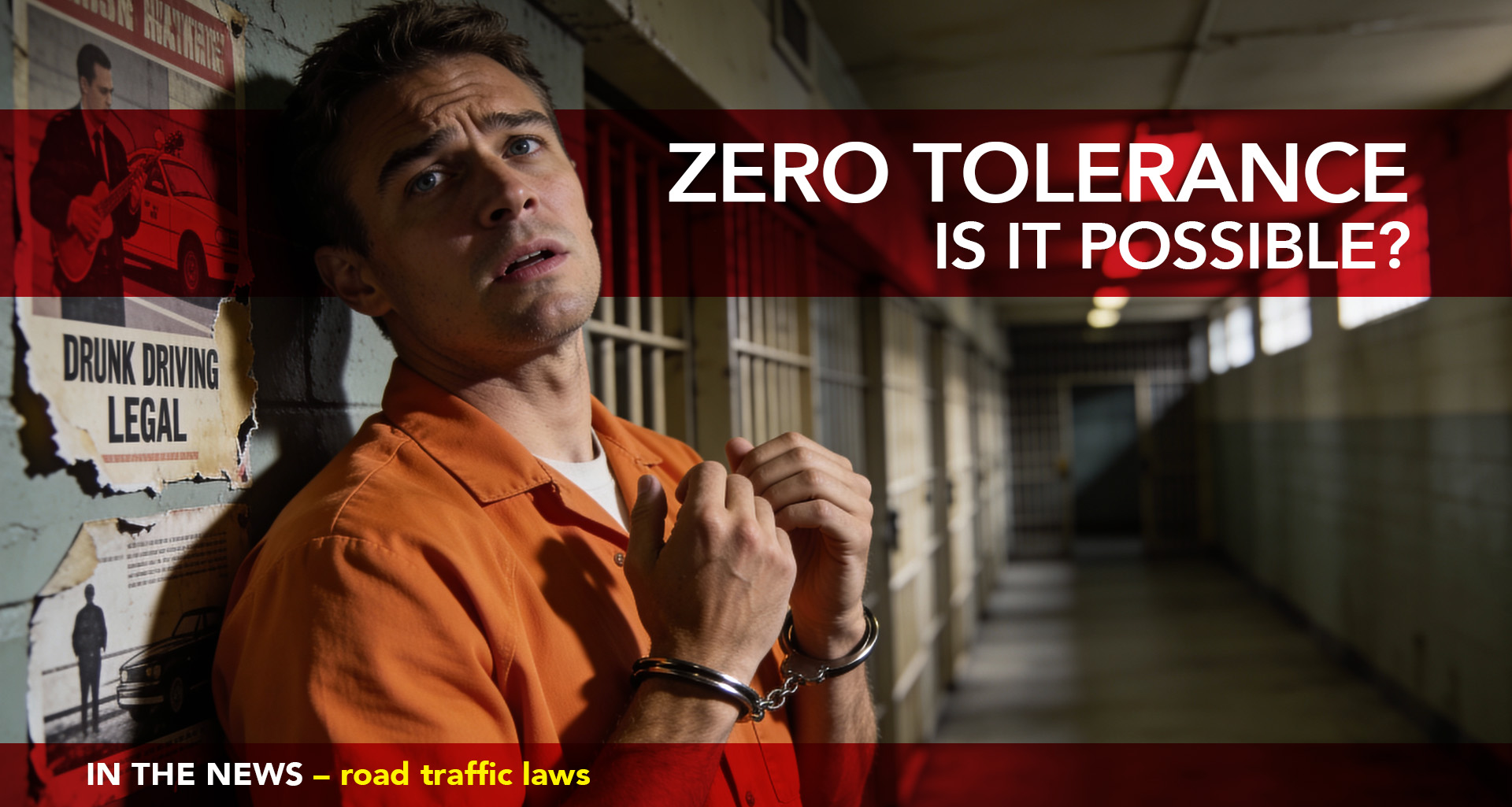
A 0% ALCOHOL LIMIT IS 100% THE WRONG SOLUTION
It is January in South Africa, which means two things are certain: we are all recovering from the festive season spending, and the Department of Transport is once again telling us that the solution to our road carnage is to lower the drunk driving limit to zero.
Transport Minister Barbara Creecy’s recent announcement that the government intends to amend the National Road Traffic Act to a 0.00% blood alcohol limit is a headline-grabber. On the surface, it sounds morally unassailable. Who could possibly argue against saving lives?
But when you strip away the emotion and look at the science, the law, and the reality of South African policing, this proposal reveals itself for what it is: a legislative distraction that will punish the compliant while ignoring the reckless.
The primary issue with a 0.00% limit is that it ignores basic biology and chemistry. The current limit (0.05%) exists not to allow people to have “a quick one for the road,” but to serve as a scientific buffer.
Many non-intoxicating substances contain trace amounts of alcohol. If you take a dose of cough mixture for a summer cold, use a specific brand of mouthwash, or consume certain desserts or over-ripe fruit, you could technically test positive for alcohol. Under current laws, these trace amounts are negligible. Under a 0.00% law, they are a criminal offence. We are effectively proposing a system where a law-abiding citizen could face arrest and a criminal record because they used a homeopathic remedy before driving to work.
This biological reality leads directly to a legal nightmare. Currently, the state must prove you exceeded a reasonable limit. By removing the buffer, the burden of proof effectively shifts to the motorist.
If you test positive due to medication or mouthwash, the onus falls on you to prove your innocence. You would need to hire lawyers and expert witnesses to demonstrate that the trace alcohol in your system was not from a beer, but from a legitimate non-intoxicating source. In a country where legal fees are astronomical, this creates a system where the wealthy can argue their way out of a “mouthwash positive,” while the average citizen is processed into the criminal justice system.
In 2020, former Transport Minister Fikile Mbalula introduced the National Road Traffic Amendment Bill to Parliament, which included measures to eliminate blood-alcohol limits entirely in favour of a zero-tolerance approach. Proponents of the bill love to cite “international best practice,” pointing to countries with strict zero-tolerance policies. However, this comparison is misleading.
Countries like Sweden and Norway—the gold standards for road safety—generally enforce a 0.02% limit, not 0.00%. They understand what our Ministry seems to ignore: you need a margin of error for medication, testing equipment calibration, and incidental exposure. By pushing for an absolute zero, South Africa is trying to be stricter than the nations that actually have this under control, but without the infrastructure to back it up.
Ultimately, this proposed amendment to legislation attempts to fix a policing problem with a pen. We hear this story every year when the fatality statistics are released. The reality is that the drivers causing the carnage on our roads are not the ones hovering between 0.00% and 0.05%. They are the ones blowing three, four, or five times over the current legal limit.
These drivers already ignore the current law. They will ignore the new one too.
Changing the number on a piece of paper does nothing to fix the real issues: a lack of consistent roadblocks, the bribery that lets drunk drivers go free, and the botched blood samples that result in low conviction rates.
We do not need stricter laws; we need the current ones to be enforced. Criminalising cough mixture won’t save lives, but getting the actual drunk drivers off the road will. Minister Creecy, please focus on the policing, not the performative legislation.
Robert Hutchinson