
Advert
Advert – scroll down
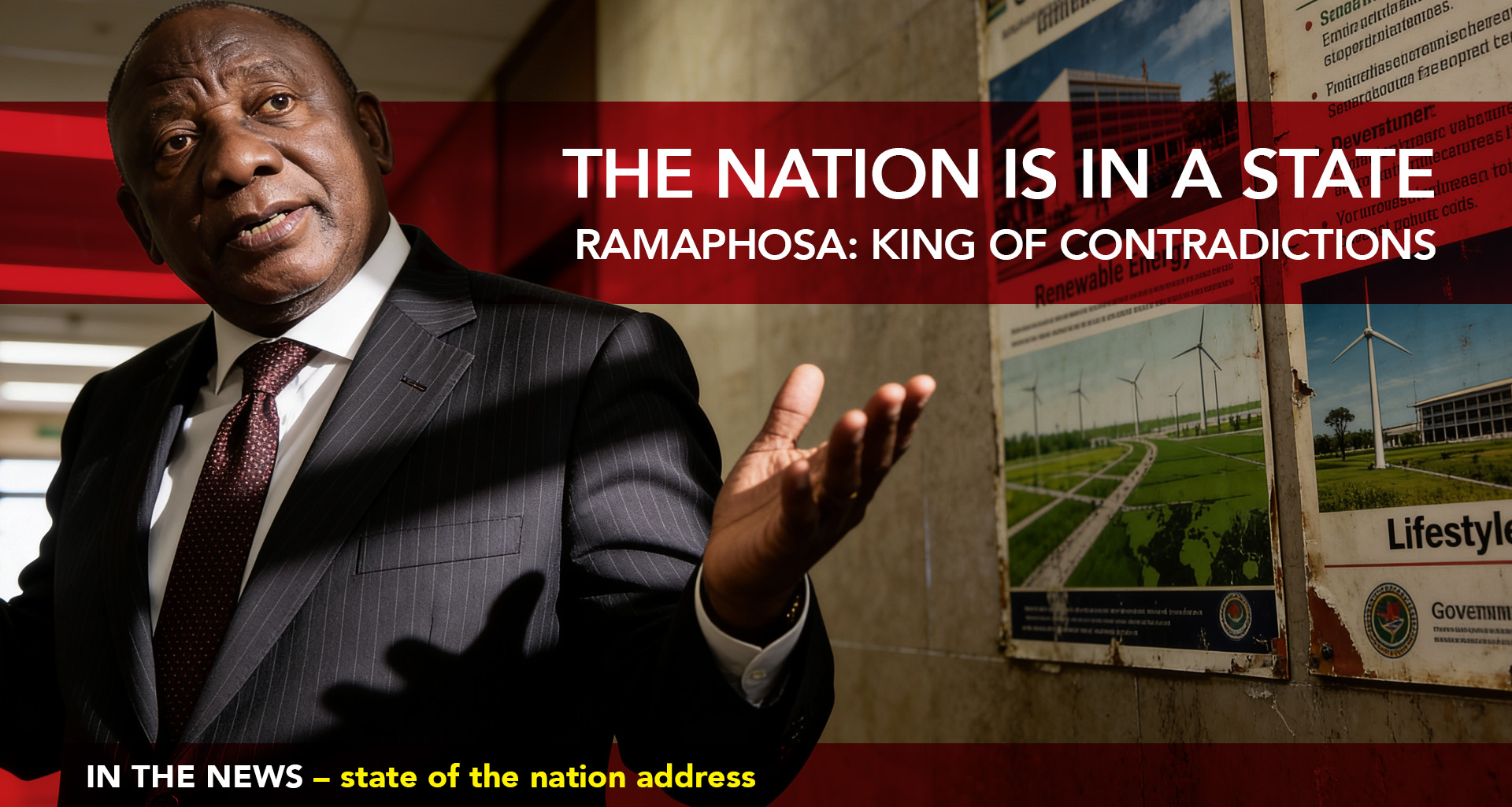
RAMAPHOSA: KING OF CONTRADICTIONS
President Cyril Ramaphosa’s 2026 State of the Nation Address delivered at the Cape Town City Hall was intended to be a roadmap for a unified and growing South Africa. Instead, it cemented his legacy as a leader caught in a tightrope walk between fundamentally opposing ideologies. On one hand, we are presented with a president desperate to court private investment and liberalise markets through Operation Vulindlela; on the other, an administration determined to “refine, realign and strengthen our Broad-Based Black Economic Empowerment framework”. You cannot roll out the red carpet for capital while simultaneously building a regulatory wall to keep it contained.
This ideological tug-of-war is most visible when comparing the sweeping promises made on the podium to the administrative realities of the amendment Bills and regulations currently facing intense public scrutiny.
The President proudly proclaimed that through recent regulatory changes and a shift toward renewable energy, “we will be able to drive down the cost of electricity”. Yet, this promise feels entirely disconnected from the immediate reality of South Africans who are currently forced to mobilise against the massive NERSA tariff clawback. The rhetoric of cheaper, abundant energy stands in stark contrast to the punitive financial reality facing the public.
Similarly, Ramaphosa highlighted a commitment to tighten labour law enforcement by hiring “an additional 10,000 labour inspectors this year”. While presented as a victory for workers, such rigid, top-down enforcement often backfires on emerging and flexible industries. The active public resistance regarding the Basic Conditions of Employment Act amendments for the creative sector is a prime example of how aggressive regulation risks suffocating the gig economy and independent contractors it should be nurturing.
On the front of corruption, the SONA leaned heavily into systemic clean-ups, noting that the re-vetting of senior police management will “include lifestyle audits”, alongside the introduction of the Whistle-Blower Protection Bill. However, the framework for these audits is far from settled. The public is currently dissecting the FIC “Lifestyle Audit” Bill, knowing full well that without intense civic scrutiny and strict, publicly mandated parameters, these audits risk becoming just another toothless bureaucratic exercise.
Ramaphosa also pointed to the Water Services Amendment Bill as a tool to hold failing municipal providers accountable, and promised new Public Procurement Act regulations by mid-2026 to curb rampant corruption. Like the proposed Hate Speech Act regulations currently open for public comment, these sweeping legislative changes are where the true battle lines are drawn between state control and civil liberties.
The government’s habit of drafting contradictory legislation without a clear roadmap for enforcement means that the fine print is where the real fight happens. For every contradictory policy pushed through the National Assembly, there is an opportunity to shape its real-world application. True reform doesn’t happen during a red-carpet address; it happens when citizens actively dissect, comment on, and challenge the very legislation that dictates their daily lives on platforms dedicated to public participation. The contradictions from the podium must be met with absolute clarity from the public.
Rob Hutchinson, founder, DearSouthAfrica.co.za