

-
-
- No I do not support the regulations 28708
- Yes I do 226
- Not fully 1026
-
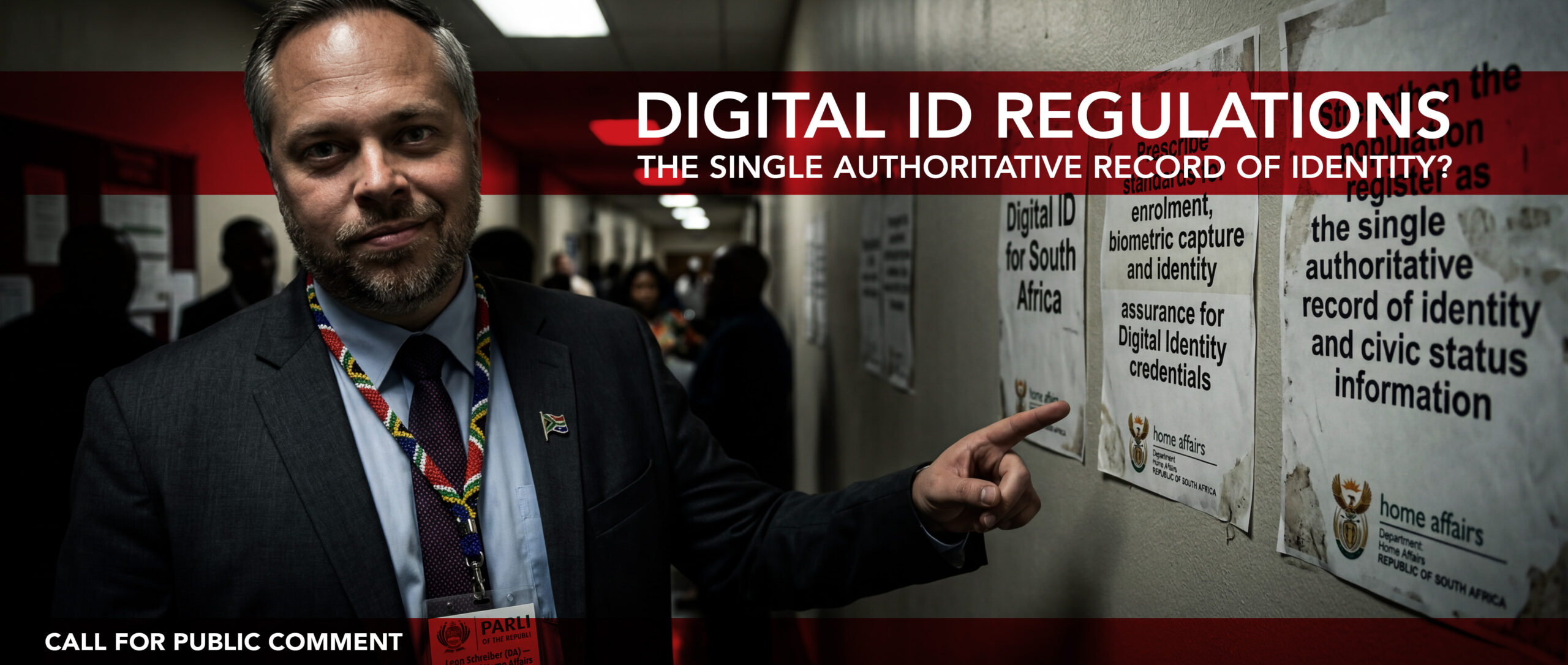
The Department of Home Affairs has published proposed amendments to the Identification Regulations under Government Gazette No. 54610.
This framework introduces a smartphone-based “Digital Identity Credential” housed inside a centralised state mobile application called MyMzansi.
While this system aims to eliminate physical administrative delays and phase out identity forgery, it introduces sweeping technological integration, real-time private sector data synchronisation, strict smartphone dependency, automated profile-tiering, and rolling validation cycles.
Because your national identity document dictates your legal right to bank, work, travel, vote, and access healthcare, it is vital that the public shapes the regulatory guardrails of this digital infrastructure. You have until 6 June 2026 to submit your formal input.
click the link for more info, or scroll down to have your say
Have your say – shape the regulations.

Top concerns
Cybersecurity Readiness & “Leapfrogging” Vulnerabilities
While the draft regulations introduce highly sophisticated cryptographic measures, including asymmetric elliptic-curve cryptography and encrypted database storage, they create an unprecedentedly dense web of database interfaces. This leapfrogges global legacy models by connecting the state’s population register directly to corporate networks via secure APIs.
-
- The Concern:
South Africa’s public sector has a fraught history with systemic data breaches and ransomware attacks. Creating an all-inclusive digital identity register that links civil data directly to private entities dramatically expands the systemic “attack surface.” If hackers compromise a central repository, the potential for automated, large-scale identity theft escalates significantly.
- The Concern:
The 5-Year Expiry & 10-Year Physical Queue Trap
The policy establishes that a digital identity credential is only valid for five years. While remote renewal via a basic smartphone facial biometric scan is permitted , Regulation 20(5) introduces a strict hidden pitfall: the credential will completely lapse if no in-person enrollment or physical verification occurs at a Department office or accredited trusted entity within a 10-year window.
-
- The Concern:
If your digital ID lapses under the 10-year rule, you are legally stripped of your active digital credential and forced to undergo a physical, standard in-person enrollment process all over again. This creates an unnecessary, cyclical bureaucratic loop that forces digitally active citizens back into notorious, real-world Home Affairs queues simply because they did not have a reason to visit a physical office for a decade.
- The Concern:
Device Binding: The Stolen Phone Lockdown
To secure your data, the system relies on device binding—the technical process of cryptographically locking your digital identity token to one single mobile device running the MyMzansi application. If a device is compromised, or its private cryptographic key is suspected of being leaked, the credential must be immediately suspended or revoked.
-
- The Concern:
Smartphones are lost, broken, or stolen daily across South Africa. The draft regulations fail to outline a transparent, secure, and user-friendly remote protocol for citizens to quickly unbind an old device and re-verify a new one. Without clear remote recovery pathways, losing a phone could mean instant, crippling exclusion from your legal identity and banking access until you can get to a physical state office.
- The Concern:
Corporate Interoperability & Privacy Creep
The regulations empower the Department to record a “Verified Relationship” between a citizen and an accredited private company, such as a bank or mobile network provider. If any core details are changed or verified in person by that business or Home Affairs, the system can automatically broadcast these updated particulars to every other private entity linked via that relationship in near real-time.
-
- The Concern:
Although the regulations explicitly ban profiling, commercialisation, and open-ended intelligence gathering, this fluid exchange of live citizen data across corporate API channels raises red flags. Automating data synchronization loops between state databases and private financial/telecom corporate giants chips away at the wall separating public civic records from private commercial infrastructure.
- The Concern:
The 30-Day Notification & Identity Assurance Penalties
Regulation 37(1) places a strict legal obligation on every individual in the population register to notify the Director-General of any permanent change to their ordinary place of residence, postal address, mobile phone number, or email within 30 days. Non-compliance with this rule will negatively alter the “Identity Assurance Level” assigned to your digital identity credential.
-
- The Concern:
Forcing citizens to log formal changes within a rigid 30-day window for routine life adjustments like swapping an email address or moving apartments is highly impractical. Lowering a citizen’s “Identity Assurance Level” serves as a hidden penalty, which could lead to sudden, frustrating rejections or delays when trying to execute everyday high-security actions like opening an account or authenticating an online transaction.
- The Concern:
Digital Exclusion & Soft Discrimination
The draft policy features transitional arrangements declaring that the system must be phased in a way that does not unreasonably exclude individuals who do not own smartphones, lack internet access, or are unable to use digital services without help. Physical IDs will also remain completely valid.
The Concern:
Despite these progressive legal promises, the practical reality of modern service delivery is that digital pathways are quickly prioritized because they save money. As government systems and corporate partners inevitably optimize their systems for the MyMzansi app, citizens relying exclusively on physical IDs could face longer delays, reduced support, and systemic “soft discrimination” when trying to access basic societal resources.
Perspectives: What is the debate?
The proposed Amendment of the Identification Regulations, 2026, has ignited a vital conversation across South Africa regarding the digitization of civic infrastructure. To help you formulate your official submission, the core arguments surrounding the policy have been restructured below into two comprehensive perspectives.
Proponents of the draft regulations, including the Department of Home Affairs, state that the transition to a decentralised digital identity network is a necessary evolution that will fundamentally modernise South Africa. Their core arguments include:
-
- A Leapfrog Milestone for National Security:
Moving to a decentralised digital framework represents an extraordinary technological milestone for South Africa. By introducing cryptographic device-binding, asymmetric encryption, and liveness-detecting facial recognition, the state is effectively “leapfrogging” older, outdated legacy systems used by global powers. This modern infrastructure will significantly curb routine identity fraud, phase out physical document forgery, and secure the digital economy. - Unprecedented Bureaucratic Convenience:
The MyMzansi application introduces massive administrative efficiency. Being able to securely renew an identity credential remotely via a basic facial scan on a smartphone eliminates the logistical burden of traveling to a state office. Furthermore, establishing automated “Verified Relationships” with trusted private partners (like banks and telecom networks) removes friction from the everyday FICA/KYC compliance process, enabling near real-time, bi-directional address and detail updates without tedious paperwork. - Gold Standard Fraud Prevention:
Strict cryptographic device-binding—anchoring your legal identity token to a single physical device—serves as the gold standard in modern cybersecurity. It guarantees that even if a criminal steals your personal data, usernames, or passwords, they cannot remotely impersonate you because they do not physically possess your unique bound mobile device. - A Vital Systemic Reset:
The rolling 5-year expiry and the 10-year in-person check-in requirements are necessary tools to keep the master population register dynamically accurate. The 10-year physical verification rule acts as a vital security reset to ensure that long-term inactive digital profiles belong to living, verified citizens, purging “ghost” records from the database. - Enforced Privacy Guardrails:
Proponents emphasise that the policy features robust, built-in statutory protections. The regulations explicitly align with POPIA, strictly banning private corporations from using identity pipelines for data commercialisation, consumer profiling, or open-ended intelligence gathering. Additionally, physical IDs remain entirely valid, meaning the system is completely voluntary.
- A Leapfrog Milestone for National Security:
Civic groups, privacy advocates, and cybersecurity experts argue that while modernisation is welcome, the draft regulations introduce expansive risks and administrative penalties that demand much tighter constitutional safeguards. Their core arguments include:
-
- Expanded National Cyber-Defences Vulnerability:
While leapfrogging older tech sounds ambitious, critics point out that cutting-edge software is only as secure as the human guardrails managing it. Given the South African public sector’s history of systemic data breaches, ransomware disruptions, and weak IT controls, connecting the authoritative population register directly to corporate servers via live APIs vastly expands the nation’s “attack surface.” Consolidating civil registry access into a centralised live network creates an incredibly high-risk target for global hacking syndicates. - The 10-Year Bureaucratic Queue Trap:
Forcing an essential civil right like a national identity credential to automatically “lapse” triggers deep administrative anxiety. Under Regulation 20(5), if a citizen remains entirely active digitally for a decade but does not happen to have a physical, in-person touchpoint with a Home Affairs branch or an accredited bank, their legal credential is wiped out. This rule unfairly penalizes compliant, digitally active citizens by forcing them back into physical queues to re-prove their identity from scratch. - Severe Device Dependency and Paralysing Lockouts:
South Africa suffers from exceptionally high rates of mobile device theft, muggings, and phone damage. By legally tying an individual’s legal identity token exclusively to a single smartphone, a lost or stolen device instantly locks that citizen out of their civic and banking lives. Because the draft regulations fail to detail a transparent, secure, and automated remote path to unbind an old phone and verify a new one, losing a device could mean immediate economic and administrative paralysis. - Corporate Privacy Creep:
Automating “near real-time” data synchronisation loops with banking and telecommunications giants chips away at the vital boundary that should separate sovereign public civic registries from private, profit-driven corporate infrastructure. Despite statutory promises, distributing live data updates across multiple third-party commercial servers inherently increases the risk of data leaks and corporate surveillance. - The Deepening Digital Divide:
Despite textual promises that implementation will not unreasonably exclude anyone, the real-world trajectory of modern infrastructure is that state and corporate platforms rapidly optimise for digital pathways to cut operational costs. Over time, poor, elderly, or rural South Africans who rely exclusively on physical documents run a severe risk of facing systemic “soft discrimination”—including longer processing delays, reduced human customer support, and slower access to essential public utilities and services.
- Expanded National Cyber-Defences Vulnerability: