OPINION: 4 pitfalls on the road to the National Health Insurance

A look at how well our mothers – and our finances – do in the public health sector does not bode well for the new NHI Bill. Alex van den Heever takes a look at the figures and power structures that will shape the future of healthcare in South Africa.

South Africa usefully generates a fair amount of health information each year. While all the sources are not integrated, it is nevertheless possible to structure the information to provide a picture of the health system’s capabilities. Let’s consider two outcomes: First, maternal mortality, or the number of women per 100 000 live births who die as a result of childbirth, during pregnancy or within 42 days of delivery or termination of pregnancy each year.

And secondly, Auditor-General findings. Both measures are indicators that health facility managers aren’t able to manipulate.

They are also signs of how well a health system is managed.

Let’s start with maternal mortality. Here, the assumption is that poor outcomes at facilities are strongly suggestive of overall managerial capability, rather than just a weakness specific to maternal health services.

South Africa’s

facility-based maternal mortality ratios at provincial and national levels are far higher than those that occur elsewhere for countries with similar or even lower levels of economic development, according to a World Health Organisation global analysis of maternal mortality between 1990 and 2015 as well as a 2008 report by the Development Bank of South Africa.
Chile, for instance, has an average maternal mortality ratio of 22 deaths for every 100 000 live births compared to 138 for South Africa. Even poorly performing countries such as Brazil — with a maternal mortality ratio of 44 deaths per 100 000 live births — perform better than our best province, the Western Cape. There, 77 women still each year will die for every 100 000 babies born alive,

Health Systems Trust 2018 data shows us.
Our worst performers, the Free State and the Northern Cape, both have maternal mortality ratios above 200.

How does our financial management fair? As the health function forms roughly 30% of overall provincial spending, provincial government performance is broadly indicative of the capabilities of the health functions.

Let’s look at the 2016/17 financial year as detailed in the Auditor-General’s

2018 report. How well provinces did on their audits is broadly in line with their maternal mortality ratios: The Western Cape achieved an 83% result with the next nearest province Gauteng at a relatively paltry 52%.
No other province achieves

more than 24%. Although these results are not health department-specific, they suggest that the management weaknesses are influenced by governance at the broader provincial level.
When the Auditor-General did compare the financial wellbeing of provincial health and education departments with others, it is clear that provincial health departments are the worst-performing.

In its report, the Auditor-General, in fact, notes that urgent action is required to prevent a collapse of health services.

The causes of public sector governance failures have not been systematically researched. But institutionalised patronage networks based on — for instance — family relationships or quid pro quo and that operate through incumbent political parties represent the most reliable explanations based on the findings of the Public Protector’s 2016

report on state capture and 2013 research published in the Review of African Political Economy.

When patronage is combined with centralised decision-making, the capture of strategic functions such as staff appointments, the issuing of licenses as well as procurement is potentially inevitable.

Evidence of the endemic corruption that has been reflected in almost every sphere of the public sector can be found in the high levels of irregular expenditure identified by the Auditor General as well as in the extensive moonlighting by critical

public sector staff such as nurses uncovered by in a 2014 study published in the journal Global Health Action.
Quality, not coverage is the problem

South Africa has one of the lowest levels of out of pocket expenditure in both the developing and developed world, found 2016 research published in the journal Health Policy, which suggests that coverage – or universal healthcare coverage – is less of a problem than the quantity and sustainability of coverage.

Yet the rationale for National Health Insurance (NHI) appears to have been lifted from contexts where universal healthcare coverage strategies are needed to close gaps in coverage rather than address weaknesses in the institutional framework and governance.

But it is within the context of South Africa’s health system weaknesses and reform imperatives that we must consider the adequacy of the proposed NHI as a means to improve the system’s capabilities. Here’s how four stack up:

1. The NHI may put too much power in the hands of a few
The governance model for the National Health Insurance Fund, which is intended – at least as stated – to procure all health services in South Africa, is effectively appointed and removed by one person: the minister of health.

The minister recommends board members, who are appointed by Cabinet. But the ministry has broad discretion to appoint acting board members and remove them.

While the National Health Insurance Fund gets to shortlist and nominate a candidate for the position of chief executive, the actions must be approved by the ministry of health.

The National Health Insurance draft Bill refers to an independent board. But ample scope exists for the ministry of health to influence the membership and tenure of the board and thereby the board’s decisions. This approach to governance leaves wide scope for extracting patronage through the person in the position of minister of health. Such practices have failed provincial health services and state-owned enterprises. No technical review has been performed to justify the governance approach. No justification is provided for why the ministry of health should have such powers of appointment and removal within a context where the experience demonstrates that it runs counter to the public interest.

2. Administration – it’s about more than paperwork
NHI proposals envision that the entire population of South Africa would need to actively choose a primary healthcare provider to be pre-funded by the National Health Insurance Fund on their behalf. So not only would the fund need to administer 56 million enrollees who could technically not receive benefits without being enrolled, it must also manage their self-assignment to healthcare facilities.

This proposal is, therefore, a considerable undertaking for which no precedent exists in South Africa.

Secondly, it is proposed that financing to hospitals be activity-based, i.e. that hospitals be reimbursed for people’s care based on the estimated costs of certain categories of treatment. This means that the treatment a patient receives has to be matched with their information and validated so that the fund could ensure that hospitals are only paid for what they provided. This would require universal public and private sector implementation of electronic patient records and associated business processes at a very high standard at all levels of care.

3. Will people flock to better-resourced private providers?
Currently, private sector hospitals are perceived to be of a higher standard than public hospitals. To prevent the excessive use of private facilities proposed to form part of the NHI network of providers, public sector hospitals would need to be governed, managed, staffed, and equipped to a similar level as private hospitals before the implementation of the overall system.

Only about 19% of public hospital beds achieved the Office of Health Standards Compliance’s

core standards by 2018. As of early this year, no strategy to upgrade the public hospital system has been evaluated or proposed.
The NHI proposals also put forth a central national determination of referral networks – or the ways in which people move between health facilities and doctors – with possible bypass fees.

As with a number of NHI proposals, the legal framework already exists to allow this with existing public services. It, has, however never been implemented due to the systemic unfairness that would exist if low income communities were penalised for bypassing poorly performing public services in their area.

From my personal experience as the finance director of the Gauteng Department of Health from 1998 to 2000, it is worth noting that the Department of Health, up until early 2019, had not been able to establish an organised system of referrals in the public sector.

4. Who decides and how close do they sit to the problems that need fixing?
A key area arising in the NHI proposals is the assumed superior purchasing efficiencies that will be derived from the introduction of what’s called a “purchaser-provider split”. This approach distinguishes between the organisation that buys healthcare services, for instance, the National Health Insurance Fund, and that which provide services. Under the current system, the purchaser (government) also provides health services. For instance, a public hospital is part of the provincial government and ultimately falls under a single accounting officer in the form of a provincial head of department.

The shift to a purchaser-provider approach requires the full decentralisation of health services so that they can be contracted individually, together and with private sector services. It is also proposed that the National Health Insurance Fund will implement the sub-regional units responsible for contracting these services.

It is worth noting that this is quite different to national healthcare services in the United Kingdom or Canada, both of which have established fully decentralised and genuinely independent regional structures (trusts) that organise the services and purchasing for their areas.

The National Health Insurance Fund is proposed as a national structure in which no structural de-centralisation is envisioned. The constitutional role of provincial health administrations in organising context-specific health strategies is not discussed or evaluated in the various official papers or in the draft NHI bill. No strategy to decentralise health service decision-making has to date been articulated, evaluated or initiated.

But perhaps the most concerning aspect of the National Health Insurance reforms, however, has been the obstruction of incremental reforms to both the public and private sectors. No legislative development of any substance has occurred from 2004 to the present day in either the public or private sectors. This, I wrote in a 2016 article in the journal Health Policy, included the halting and withdrawal of all

structural reforms of the private health system that were in the process of implementation during 2008.
The reason? Apparently, there was an assumption that the complete NHI framework could be implemented in a

single year between 2009 and 2010.
As a consequence, basic systems of governance have not been upgraded nor have resource allocation mechanisms been updated despite accumulating evidence of system weaknesses that are amenable to intervention.

The flawed governance frameworks that are exposed to patronage have been retained.

And in the NHI framework, it is proposed that they be maintained. Given the above, the most probable scenario for the South African health system going forward involves the maintenance of the status quo with the possible implementation of a NHI, which is unlikely to become fully operational.

* The above is based on a chapter by Alex van den Heever in a recent book from the Mapungubwe Institute for Strategic ‘Reflection’s (MISTRA):

Doctors and hospitals won’t be able to charge what they like under NHI

Health workers, nurses, doctors, dentists, specialists, physiotherapists, paramedics and hospitals will be subject to price control and guidelines if the NHI bill is passed.

Theses prices will be set by a pricing committee.

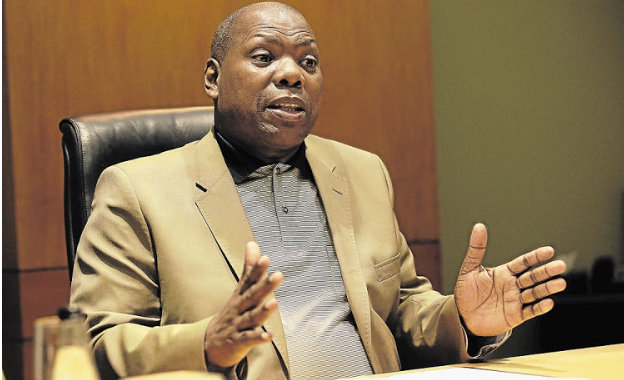
TimesLIVE has had sight of the bill, which health minister Zweli Mkhize is releasing publicly on Thursday. It has been sent to parliament.

The NHI aims to provide high-quality free healthcare to all and will only pay hospitals, doctors and other staff who provide quality service and meet standards.

The NHI Fund can refuse to work with doctors and hospitals that do not adhere to a “national pricing regimen”.

The bill states the fund can refuse to work with establishments or workers that:

  • Have failed to or are unable to adhere to treatment protocol and guidelines;
  • Fail to adhere to national pricing regimen for services delivered; or
  • Deliver services that are not acceptable to the fund.

Various committees and teams, with medical professors, will decide what protocols doctors can follow, what treatments they can administer and what lists of drugs and technology can be used.

Health workers and hospitals will have to be accredited and meet quality standards every year to be paid by the NHI Fund.

Medical aids will not exist as we know them.  They will only be allowed to pay for services not paid for by the fund when NHI is in full force.

More than 10 different acts need to be amended to allow the bill to be passed.

The bill also gives the minister and provincial MECs huge powers.

They can make regulations on:

  • All the medical practices and procedures followed by health workers (which include doctors, nurses, dentists, dieticians, and so on) and hospitals or clinics paid for by the fund;
  • The relationship between medical aids, insurance policies and the fund;
  • The development of the formulary of approved treatments and medicines;
  • The monitoring of the fund;
  • Fees payable to the fund;
  • The levels of reserves kept in the fund for stability;
  • How the extra NHI funds must be invested;
  • How doctors and hospitals bill/invoice the fund, and what medical codes they use on invoices;
  • How the state buys private health services from private hospitals and private doctors’ practices;
  • How doctors, therapists, health workers and hospitals are paid;
  • The accreditation of doctors, hospitals and health workers, like optometrists and speech therapists, by the Office of Health Standards Compliance;
  • The budget of the fund;
  • The information that must be provided to the fund by the national database and by doctors and hospitals; and
  • The registration of every user (every citizen and legal immigrant) of the fund.

The bill will be debated in parliament after its public release.

Article By Times Live

Five things you need to know about the new National Health Insurance Bill

DearSA - National Health Insurance

Parliament is set to release the National Health Insurance (NHI) Bill by 9am on Thursday morning. Here is how healthcare in South Africa is likely to change.

1. Will you be able to have a comprehensive medical aid?

No. Once the NHI has been fully implemented, your medical scheme will not be allowed to cover any health services that the NHI offers. You will have to use the NHI for those services. Your medical aid will only be able to provide you with complementary cover, in other words, services that the NHI doesn’t cover. By when will your medical aid, in its current form, disappear? According to the Bill, the NHI Fund needs to be up and running by 2026 through a system of “mandatory prepayment”.

Many experts, however, argue that the NHI will take much longer to take off.

2. What services will the NHI cover?

The Bill doesn’t specify what services the NHI would cover, but it does mention that there will be “comprehensive healthcare services”. A benefits advisory committee, appointed by the health minister, will decide which services will be offered. The Bill says these services will be available for free, so there will be no co-payments

The NHI won’t pay for treatment when it can demonstrate that “no medical necessity exists for the healthcare service in question”, when the medicine or treatment is not included in the NHI’s list of medicines, also known as the formulary, and when “no cost-effective intervention exists for the healthcare service”.

According to the Bill, the NHI will start to buy healthcare services for children, women, the elderly and people with disabilities by 2022.

3. Will you be able to go to a specialist directly?

No — if you do, the NHI won’t pay for it. You will have to register at an NHI-accredited primary healthcare facility, and, each time you need healthcare, you will have to go to that facility. You will only be able to consult a specialist if the doctor or nurse at your primary healthcare facility deems it necessary to refer you to one. If you’re travelling and fall ill, you’ll be able to go to an accredited facility in the area you’re visiting.

4. What happens if you’re an asylum seeker or an undocumented migrant?

You will only be able to access emergency medical services and services for ‘notifiable conditions of public health concern’, such as TB. HIV treatment is also likely to be available to asylum seekers and illegal immigrants, as HIV is infectious and it is in the best interest of the country to treat everyone who is infected with the virus to prevent its spread. The children of asylum seekers and migrants, however, will be entitled “basic healthcare services” provided for in the Constitution.

If you’re a registered refugee, you will be entitled to all services, provided that you have registered for the NHI by using your refugee identity card.

The NHI will also cater for ‘individual foreign nationals’ determined by the home affairs minister, after consultation with the minister of finance.

5. Who will pay for the NHI?

In short, taxpayers. The Bill says the money will be collected “in accordance with social solidarity” through payroll taxes for employees and employers, a surcharge on personal income tax, the reallocation of medical scheme tax credits and general taxes. Money that Treasury currently allocates to provinces through the ‘provincial equitable share’ and ‘conditional grants’ will be shifted to the NHI Fund.

Article from NEWS 24

PRINT PG1 – SA is running out of time and money, says Nedbank’s Mike Brown

One of the top priorities requiring urgent action is Eskom, which Brown says is the ‘very sick’ elephant in the room

SA is running out time and money to ease a cash crunch at state-owned companies,  the CEO Nedbank said,  the latest business leader to express frustration at the pace of turnaround efforts at parastatals that also include debt-laden Eskom.

Fixing the state-owned companies, many of whom are losing money and survive on cash injections for the government, is vital to President Cyril Ramaphosa’s drive to revive the economy and shore up investor confidence.

EDITORIAL: Mkhize’s recipe for ruining health care

NHI has remained a noble pipe dream stymied by unachievable ambitions and a funding requirement quite out of reach for a bankrupted country

Even in a country desensitised to bonkers ideas, the mutterings of health minister Zweli Mkhize about SA’s plans for National Health Insurance (NHI) were hard to stomach. For years, NHI has remained a noble pipe dream stymied by unachievable ambitions and a funding requirement quite out of reach for a bankrupted country.

Consider the maths. This year, the government allocated R222.6bn to health care. Most of the budget was earmarked for salaries. And yet NHI, by the most conservative estimates, would cost more than that entire budget. It’s a staggering sum — especially when we don’t know yet whether NHI will work.

Speaking last week, as he revealed the results of 11 NHI pilot studies, Mkhize seemed unchastened by the unconvincing findings. Though the pilots cost more than R4bn, a team evaluating the project said they couldn’t conclude it had improved the health of residents in any district where it was trialled.

Yet Mkhize was adamant: NHI is going ahead — damn the obvious glitches. This is why, last week, an NHI Bill was delivered to parliament.

When pushed on how exactly it would work, Mkhize revealed a disturbing underpin for NHI: the government will bar people who have paid for private health care from seeing specialists, unless there’s a compelling reason. “It is not my right to see a specialist because I can afford it. It is a distortion of how the system should be working,” he said.

For Mkhize to begin dictating what medical care you can buy is a slippery slope.

It’s hard to disagree with the Capitalist Party, which argues that it would be outright tyrannical to vest responsibility for deciding who gets critical health care in the people least qualified to make that call: state bureaucrats.

Here, it’s difficult to see too many scenarios in which doctors, nurses and specialists are not encouraged to flee, rather than work in a system held together by a strip of plaster and noble intentions.

During last week’s briefing, Mkhize was visibly frustrated by the questions about the role of the private sector. “Some people say NHI is unaffordable. What is unaffordable is the rising cost of [private] care,” he said. He stressed that the public health sector is riddled with corruption and must be fixed.

Now, Mkhize is right that medical aid is increasingly unaffordable. But the government isn’t paying for it — taxpayers who are already paying for the crumbling public system are then paying again for private medical aid out of their own pockets. Why pay more, if the government can’t be bothered to fix what it has?

Mkhize’s unconvincing answer is that the rich should subsidise the poor in the new scheme.

Here again, he gets it horribly wrong. For a project as immense as NHI, you can’t get away with just extracting more from the rich — you’ll have to plunder the middle class too. Rough estimates by finance gurus suggest that NHI could add at least two percentage points to personal income tax, or it would have to be funded by another hike in VAT. It’s risky to think citizens will just calmly accept this.

And, as it is, the wealthy and the middle class already subsidise medical treatment for the poor: where does Mkhize think the R222bn that goes to SA’s public hospitals comes from? In theory, that tax money should buy a thriving public health sector. In practice, it buys a dysfunctional system where theft of resources, crippling inefficiency and accountability-free hospitals are the order of the day.

But marshalling private sector resources into fixing that won’t produce a better result, because this isn’t a money problem. It’s a management problem. Until the government takes a harder line with public sector trade unions, and begins firing people who are incompetent, it won’t get value for its R222bn, or however much it throws at the problem.

Perhaps Mkhize knows this. Perhaps he’s just invoking the politics of desperation by launching a kite that has little hope of remaining in the sky. But abdicating responsibility, and asking the private sector to fix what he won’t, means NHI is doomed to fail.

article by FinancialMail

OPINION: The Constitution requires us to hold both our contradictory stories about land

As long as the politics of memory requires us to have one story declared the ultimate winner and sole truth, the common ground will be lost leading to a battle for the single truth, writes Elmien du Plessis.

A recent legal question guided me to the physical boundaries of our country. As I read about our boundaries and borders, the research spiral took me to treaties concluded in the 1800s. I lost myself in the stories that these treaties tell.

This road-trip of treaties and international agreements ensured that the laws guaranteed that in most part, things stay the same, even if the governments change.

In my imagination I travelled this route. The boundaries of the Transvaal Republic had names of farms that sound familiar to my Afrikaans ear, sprinkled with reference to the indigenous peoples living there in the unfamiliar names of mountains and rivers that in their turn formed the boundaries of communities.

“…[Thence up the course of the Notwane River to Sengoma, being the Poort where the river passes through the Dwarsberg range; thence, as described in the Award given by Lieutenant-Governor Keate, dated October 17, 1871, by Pitlanganyane (narrow place), Deboagnak or Schaapkuil… […] to the north-western corner beacon of the farm ‘Mooimeisjesfontein…'”

And so the boundaries tell the stories of how the lives of the people on the land were so intertwined in their foreignness. We are strangers who’ve know each other for centuries, divided by imaginary lines that were concretised in harsh laws. The harsh laws that divided us are repealed, but the imaginary and psychological lines remain.

The national boundaries are important. It contains us. Our borders are set out in our Constitution, our story. It tells the story that South Africa is a country, a nation, also because of the boundaries that contain us. The boundary and the treaties that were drawn and established over centuries, and that are cemented in our Constitution, therefore purport to tell us where we belong. It seeks to define who we are, to establish a common identity that transcends the ethno-racial identities that each of us embodies. This is echoed in the last line of our amalgamated anthem that ends with “South Africa our land”.

Without the stories that boundaries tell, there would not be a South Africa. The question is: do we believe in the story of South Africa?

The conversation around land that the amendment of Section 25 opened up, is a symptom of our struggle to believe in the story that these national boundaries tell. Inside the South African boundaries, we sit with many stories.

The one is a story of contested boundaries and belonging, of people settling on the land and claiming ownership through treaties and allowances from colonial governments, later by claiming registered title. The title deed draws boundaries that fences entrench. There is a belief that blood and sweat baptised the claim to the land.

It is a story that is indeed true, and that did indeed happen, but that requires a belief in and adherence to Roman-Dutch law as influenced by English law, that underlies it, for a sense of legitimacy. For believers of this story, land that accrues to persons by virtue of being members to a community, held in terms of customary law that only allows insiders with consensus of the community, is a strange unbelievable story.

A belief in this story struggles to acknowledge that dispossession of land was not only a physical act. It was also the enforcement of a legal system strange to the people who were occupying the land in terms of their laws, their story. It rested on the belief that one story was less strange than the other.

The other story – the story of the people who inhabited the area before it was dispossessed physically or by law, is of course also true, and co-exists with the title deed story.

For indigenous people individual title to a whole piece of land, established in terms of proclamations and held to the exclusion of all others, bestowed by a foreign authority and separate from any social relations, was a strange story. In terms of the indigenous story, land belonging is tied up with social relations and a sense of belonging: the ancestors, the living and the yet-to-be-born. Communal land, as set out in the Baleni judgment “forms an inextricable and integral part of this community’s way of life […] a residential plot presents far more than merely a place to live: it is a symbol of social maturity and social dignity. Each residential plot further serves as a critical conduit for the preservation of relations of inter-linkage and mutual dependence between the living and the dead and is critical for the wellbeing of each imizi (household).”

Our Constitution, being a story in itself, carries this contradiction and attempts a reconciliation of opposing stories by recognising the common law alongside the indigenous law. It requires us to hold them both. And it is this discomfort and disconnectedness that sometimes play out when we wrestle with the land question.

It is this possibility that both stories are true that holds the power to either be our downfall or our salvation.

In his book “If this is your land, where are your stories?” Chamberlain tries to answer the question whether land can really ever be home to more than one people. He concludes that it is possible, but that it requires a re-imagination of Them and Us, an ability to hold the ambiguity in Them/Us, Reality/Imagination.

He relies on the role of contradictions as part of the art of storytelling. When we realise that contradiction is inherent in the stories, and when we realise that our stories sound just as strange to Them, than theirs to Us, that is when we find common ground. But as long as the politics of memory requires us to have one story declared the ultimate winner and the sole truth, the common ground will be lost leading to a battle for the single truth. A zero-sum game.

In The Book of Laughter and Forgetting, Kundera writes that “the struggle of man against power is the struggle of memory against forgetting … The only reason people want to be masters of the future is to change the past. They are fighting for access to the laboratories where photographs are retouched and biographies and histories rewritten.”

If the current struggle for power is indeed a struggle to change the past, it is because the ambiguity of two equally true stories can be uncomfortable, and a single truth comforting, at least for the winner of a zero-sum game. Being confronted with the strangeness of your own story can leave one bewildered.

Therefore, our solace lies in the knowing and accepting that both the stories are true. That both stories are familiar and strange at the same time, a realisation that makes it possible for the ears to hear a story that is strange.

We need to embrace the strangeness of the Other’s stories, and not shy away. We need to sustain ourselves in relation to the strangeness of others. The point is not to become the other, or for them to become us. The goal is that each of us become ourselves, and embrace the other in the comfort of the strangeness, without being strangers. And to then find a way forward.

This listening to and understanding of the stories of the Other holds the possibility to believe in the collective story that the boundaries of South Africa tells: that we are indeed one sovereign, democratic state, based on human dignity, the achievement of equality and the advancement of human rights and freedoms. From Soebatsfontein, to Umgungundlovu.

– Elmien du Plessis is associate professor in Law at the North-West University.

Article from News 24

WATCH | ANC will nationalise Reserve Bank ‘responsibly’, says Ace Magashule

The ANC government will push through with the nationalisation of the Reserve Bank – but “in a responsible manner”.

This is according to to ANC secretary-general Ace Magashule, who was briefing journalists on Tuesday on the outcomes of the governing party’s national executive committee (NEC) meeting at the weekend.

Magashule said this was in line with resolutions of the ANC Nasrec conference in December 2017.

“Once more on the SA Reserve Bank the NEC reaffirmed the 54th conference resolution to return the sovereignty of this national institution to the people of SA as a whole.

“The NEC emphasised the policy positions of the ANC on the mandate of the SA Reserve Bank and its intendence as set out in the constitution of the republic which mandate will be exercised with regular consultation with government.

“Our position on the nationalisation of the Reserve Bank has not changed so we have said we are going to implement our resolutions of Nasrec and as we do so decision that must be implemented must be implemented in a responsible way,” said Magashule.

He said it was paramount for the ANC government to do this in a responsible way as it is the governing party.

His deputy, Jessie Duarte, added: “It is our desire that the Reserve Bank should be in the hands of the people of SA and at the same time we must accept that the mandate of the Reserve Bank, because of its independence, that doesn’t change because it cannot change based on who the shareholder is.

Article by ZINGISA MVUMVU and Times Live

South African tax protest planned

The Solidarity NetWork announced that it would kick-off a comprehensive and lawful tax protest campaign next week.

This South African tax protest includes at least six legal actions against state enterprises and tax plunderers.

The actions include, among others, an application for business rescue of SAA. According to Solidarity, the SAA case would be the most significant tax case South Africa has ever seen.

“It is time that taxpayers turn to active and lawful tax protest. South Africa must discover the power of tax activism,” said Solidarity COO Dirk Hermann.

“We’ve already had a taste of it with the E-toll protest. Tax protest does not have to include the withholding of tax.”

“Taxpayers can unite across traditional barriers, making use of legal instruments to call the state and tax plunderers to account,” he said.

Legal action

Solidarity will this week serve urgent court papers on Denel to force it to pay the unemployment insurance and tax contributions it had deducted from employees to where it is due.

It also started a process to have mismanagement and corruption perpetrated by former Denel directors investigated with a view to their possible prosecution.

A similar process will be followed in collaboration with Sakeliga in respect of Eskom.

This may have major implications for former Eskom directors such as Brian Molefe. Similar applications against other directors at other state-owned enterprises may follow.

Solidarity will also request advocate Gerrie Nel of AfriForum’s Private Prosecution Unit to institute a private prosecution process against Molefe.

The union obtained an order as to costs against Hlaudi Motsoeneng, former SABC COO, after a court ruling in favour of the SABC 8.

Application of business rescue against SAA

The biggest case will be an application of business rescue against SAA and the Minister of Public Enterprises, Pravin Gordhan.

A year ago, Solidarity wanted to bring the same case against SAA, but SAA’s former CEO, Vuyani Jarana, made several promises to Solidarity.

“However, these promises have not been met and Jarana has left. We must protect sustainable work at SAA,” Solidarity said.

This will be the first time that a business rescue application is brought against a state enterprise.

“This is one of the most drastic actions taxpayers are taking to protect their tax money. Taxpayers’ money in SAA is too valuable to allow the airline to crash down,” said Hermann.

According to Hermann, taxpayers underestimate their power. “The state is not working with its own money, but with the money of taxpayers,” he said.

Article by MyBroadband 

Tax plunderers beware, warns Solidarity on looming tax protest

Solidarity is embarking on what it has called a “lawful tax protest” campaign, which would include legal actions against state enterprises.

Taxes and VAT form a big part of the fiscus and tax avoidance in South Africa is illegal.

Talks of a tax revolt have surfaced in the recent past, but it was called irresponsible and highly unlikely by economists who spoke to Fin24.

However, Solidarity chief operating officer Dirk Hermann, in a statement issued on Sunday, said that it is time “taxpayers turn to active and lawful tax protest”.

South Africa must discover the power of tax activism, he said. “We’ve already had a taste of it with the E-toll protest. Tax protest does not have to include the withholding of tax,” Hermann said.

Solidarity said it will serve urgent court papers on Denel to force it to pay the unemployment insurance and tax contributions it had deducted from employees to where it is due. Solidarity said it also started a process in terms of section 165 of the Companies Act to have mismanagement and corruption perpetrated by former Denel directors investigated with a view to their possible prosecution.

A similar section 165 process will be followed in collaboration with Sakeliga in respect of Eskom, which may have major implications for former Eskom directors such as Brian Molefe. It warned that similar applications against other directors at other state-owned enterprises may follow

Solidarity plans to mobilise thousands of taxpayers to get involved with the tax protest and to collect millions of rands through crowd funding.

“We must complete this. We are hungry, we want our land back,” Majodina said after introducing the motion, to applause from the ANC and EFF.

DA chief whip John Steenhuisen said it was a “smokescreen for the government’s failure with land reform over the past two decades”. He added the CRC process was “legally, procedurally and constitutionally flawed”.

“What this motion is, it is the greatest hoax perpetrated on the people of South Africa,” Steenhuisen said.

EFF MP Hlengiwe Mkhaliphi said an amendment to section 25 would “reflect the pain where we come from as black people”.

She added in its current form, section 25 “draws a moral equivalence between the dispossessed and the dispossessors”.

“It makes the settler equal to the dispossessed,” Mkhaliphi said.

She added the EFF would ensure the ANC does not introduce “artificial amendments” and that the land was returned to its “rightful owners, which is the black people”.

IFP MP Elphas Buthelezi said there needed to be justification for amending the Constitution.

“The Constitution has not failed our people, it is the policies of this government that failed our people,” he added.

Hermann said taxpayers underestimate their power.

“The state is not working with its own money, but with the money of taxpayers.”

He said it is not disloyal to utilise legal instruments for accountability.

“In fact, it is loyal to taxpayers and ordinary South Africans, rich and poor, black and white who expects good infrastructure and services from the state, and who are entitled to it.”

More information about the campaign’s activities, including an application to place SAA into business rescue will be revealed, said Solidarity.

Article by FIN 24

‘We are hungry, we want our land back’: Expropriation without compensation officially back on Parliament’s agenda

DearSA land expropriation

Amending Section 25 of the Constitution is officially before Parliament again after the National Assembly passed a motion on Thursday to establish an ad hoc committee to draft an amendment to allow expropriation without compensation.

In the debate on the motion, the old fault lines between parties who supported amending the Constitution and those who did not, have emerged yet again. The DA, IFP, FF Plus and ACDP opposed the motion.

ANC chief whip Pemmy Majodina brought the motion, which noted the fifth Parliament adopted a report by the constitutional review committee (CRC) recommending the Constitution should be amended so section 25 makes “explicit that which is implicit in the Constitution, with regards to expropriation of land without compensation, as a legitimate option for land reform, so as to address the historic wrongs caused by the arbitrary dispossession of land, and in so doing ensure equitable access to land and further empower the majority of South Africans to be productive participants in ownership, food security and agricultural reform programmes”.

She also noted an ad hoc committee was established for this purpose by the fifth Parliament, but it had not completed its task before Parliament was dissolved before the May general elections. The committee recommended that the matter should be concluded by the sixth Parliament.

We are hungry, we want our land back”

“We must complete this. We are hungry, we want our land back,” Majodina said after introducing the motion, to applause from the ANC and EFF.

DA chief whip John Steenhuisen said it was a “smokescreen for the government’s failure with land reform over the past two decades”. He added the CRC process was “legally, procedurally and constitutionally flawed”.

“What this motion is, it is the greatest hoax perpetrated on the people of South Africa,” Steenhuisen said.

EFF MP Hlengiwe Mkhaliphi said an amendment to section 25 would “reflect the pain where we come from as black people”.

She added in its current form, section 25 “draws a moral equivalence between the dispossessed and the dispossessors”.

“It makes the settler equal to the dispossessed,” Mkhaliphi said.

She added the EFF would ensure the ANC does not introduce “artificial amendments” and that the land was returned to its “rightful owners, which is the black people”.

IFP MP Elphas Buthelezi said there needed to be justification for amending the Constitution.

“The Constitution has not failed our people, it is the policies of this government that failed our people,” he added.

‘The EFF is more honest than the ANC’

FF Plus leader Pieter Groenewald said while the ANC said they wanted expropriation without compensation with strict preconditions, the EFF was more honest.

“The EFF is more honest than the ANC. For them, it is an ideological issue because they say they want the land.”

He said sometimes it was difficult to tell whether the EFF and ANC were fighting, or in love.

Groenewald added the motion should have been named the “motion to destroy the economy and the future of South Africa”.

ACDP MP Steve Swart noted that the experts, who made presentations to the previous ad hoc committee, advised to tread carefully in amending the Constitution.

GOOD MP Shaun August said section 25 in its current form made provision for expropriation.

“Public land must be used for public good,” he added.

NFP MP Munzoor Shaik-Emam said while his party supported an amendment, it should be done in a way that does not disadvantage anyone.

“Two wrongs do not make a right,” he added.

ANC MP Mathole Motshekga said South Africa’s original sin was the violent dispossession of the Khoi and San people, and that the 1913 Land Act had consolidated the dispossession of the Khoi, San and black African people, which “degraded and dehumanised our people”.

Before voting, ANC MPs started singing, with EFF MPs joining in.

The motion was passed with 189 votes to 67, with no abstentions.

The new ad hoc committee will consider work and recommendations in the reports of the constitutional review committee and the previous ad hoc committee on the amendment of section 25 of the Constitution.

It will have 11 voting members, six from the ANC, two from the DA, one from the EFF and two from the other parties.

There will also be 11 non-voting members, two from the ANC, one from the DA, one from the EFF, and 10 from the other parties.

The deadline for the committee to report back to the National Assembly is March 31, 2020.

The ANC indicated earlier that it would nominate Motshekga as chairperson of the committee. Agriculture, Land Reform and Rural Development Minister Thoko Didiza was the chairperson of the fifth Parliament’s ad hoc committee.

Article from News 24