

- No I do not support the regulations 3
- Yes I do 1
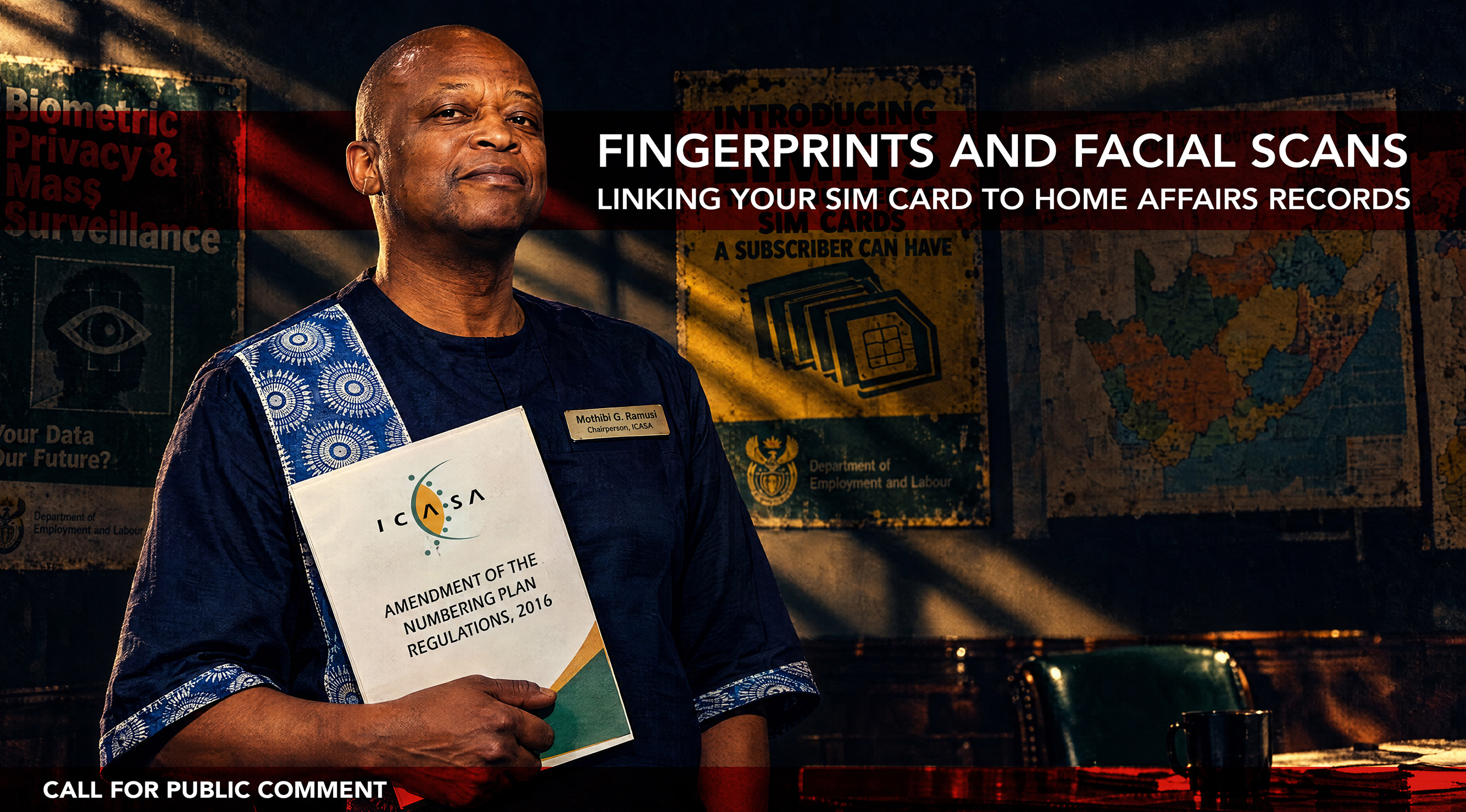
The Independent Communications Authority of South Africa (ICASA) has published the Draft Numbering Plan Fifth Amendment Regulations, 2026.
This framework mandates that mobile network operators must verify the identity of every subscriber through biometric data (fingerprints or facial images) checked against the Department of Home Affairs (DHA) national population register upon SIM activation or when requesting a SIM swap. Furthermore, the regulations cap the number of active mobile lines assigned to an individual to five (5) per network, and give networks a two-year transitional window to retroactively capture biometrics for all existing active subscribers.
click the link for more info, or scroll down to have your say
Where Do You Stand?
🔴 I OBJECT to the Draft Numbering Plan Fifth Amendment Regulations, 2026 (I reject handing live biometric data to private telecom operators and oppose the five-number limit as an infringement on consumer choice and privacy).
🟡 I AMEND / NOT FULLY (I support biometric checks for critical actions like SIM swaps to prevent fraud, but I reject the retroactive scanning of all existing users and demand the five-number cap be increased).
🟢 I SUPPORT the Draft Numbering Plan Fifth Amendment Regulations, 2026 (I support strict biometric KYC laws, SIM swap protections, and number limits to permanently dismantle the black market for fraudulent SIM cards).
Have your say – shape the regulations.

Top concerns
-
- What the Regulation Proposes:
Sub-regulation 6A(5) makes it a mandatory legal requirement for mobile networks to verify the identity of a subscriber through live biometric verification (facial images or fingerprints) against the Department of Home Affairs (DHA) national population register upon activation or re-activation of a mobile number. - The Core Risk & Impact:
While the regulations state this data must only be used for verification purposes, disseminating live biometric capture infrastructure across thousands of retail outlets and street-level agents creates a massive cybersecurity vulnerability. Critics argue that linking private telecom databases with state biometric records normalises mass surveillance and vastly expands the attack surface for identity theft. - Why choose this:
Select this option if you believe that forcing law-abiding citizens to hand over fingerprints or facial scans to private network operators for basic communication services is a disproportionate violation of the constitutional right to privacy.
- What the Regulation Proposes:
-
- What the Regulation Proposes:
Under Sub-regulations 6A(11) and 6A(12), a mobile network is strictly prohibited from approving a SIM-swap request if the applicant’s biometric identity cannot be successfully verified and corresponded with the original subscriber record. - The Core Risk & Impact:
This strict legal dependency creates a dangerous reliance on the uptime of the Department of Home Affairs’ IT infrastructure. If the DHA biometric API experiences standard downtime or server failures, ordinary citizens will be entirely locked out of recovering their phone numbers. This could cut individuals off from emergency services, digital banking, and business communications until state systems come back online. - Why choose this:
Select this option if you are concerned that tying essential digital connectivity and banking recovery to the notoriously unstable IT infrastructure of Home Affairs will cause severe administrative paralysis.
- What the Regulation Proposes:
-
- What the Regulation Proposes:
Sub-regulation 6A(12A) explicitly limits the assignment of mobile numbers to a maximum of five (5) per subscriber per network. While juristic persons (registered companies) are exempted, natural persons are strictly capped. - The Core Risk & Impact:
This arbitrary cap ignores the reality of modern, digitally integrated households. A single parent or homeowner providing connectivity for children, a home Wi-Fi data router, a vehicle tracking system, and a home alarm will instantly hit this limit. To exceed it, citizens will be forced to either juggle multiple network providers or incur the administrative cost of registering a formal company simply to manage their household electronics. - Why choose this:
Select this option if you believe a hard cap of five numbers per network is an unreasonable infringement on consumer choice that fails to accommodate the “Internet of Things” (IoT) and the realities of modern family connectivity.
- What the Regulation Proposes:
-
- What the Regulation Proposes:
Regulation 24A is a transitional measure that gives licensees a window of two (2) years from the commencement date to retroactively verify the identity of all their existing subscribers using biometric DHA checks. - The Core Risk & Impact:
This mandate requires mobile operators to physically verify the biometrics of tens of millions of existing prepaid and contract customers within 24 months. The logistical undertaking of deploying biometric scanners nationally and processing millions of in-store visits is immense. These multi-billion-rand compliance and infrastructure costs will inevitably be passed directly to the consumer, likely triggering increases in standard voice and data tariffs. - Why choose this:
Select this option if you believe it is unfair to penalise existing, compliant citizens with the threat of disconnection and to burden the public with the financial costs of a retrospective biometric rollout.
- What the Regulation Proposes:
-
- What the Regulation Proposes:
Sub-regulation 6A(8) stipulates that a mobile number assigned to a foreign national entering the Republic on a short or long-term stay shall only remain active for a period not exceeding their visa validity, or a maximum of 90 calendar days. - The Core Risk & Impact:
While intended to stop the black-market sale of tourist SIM cards, this strict cut-off disrupts regular cross-border traders, digital nomads, and foreign investors who travel frequently to South Africa. Automatically terminating their numbers severs their access to local banking apps, business contacts, and two-factor authentication services the moment they leave the country or hit the 90-day mark. - Why choose this:
Select this option if you are concerned that this rigid deactivation policy will harm the tourism sector, discourage foreign direct investment, and unnecessarily complicate the lives of legitimate cross-border workers.
- What the Regulation Proposes:
-
- What it means:
Selecting this option indicates that you do not view the draft regulations as suffering from a single technical flaw, but rather that the entire framework is fundamentally compromised across privacy, logistical, and economic dimensions. - The Core Logic:
You assert that combining mass biometric surveillance, inflexible consumer caps, and an expensive retroactive compliance mandate creates an unworkable regulatory regime that punishes the law-abiding public far more effectively than it deters sophisticated criminal syndicates. (Note: Selecting this will prompt you to specify your most critical priority concern from the list above to assist in the platform’s data analysis).
- What it means:
-
- The Regulation: The draft seeks to repeal the 1961 regulations and move to a risk-based surveillance system.
- The Argument: Supporters believe this framework is necessary for South Africa to meet international FATF standards, prevent money laundering, and protect the national economy from illicit financial flows.
Perspectives: What is the debate?
-
- Eradicating SIM Fraud:
Mandating live biometric checks against the national population register eliminates the rampant black market of pre-registered SIM cards used in syndicates, scams, and kidnappings. - Protecting Bank Accounts:
Requiring strict biometric authorisation before processing any SIM swap request provides an absolute layer of defence against identity thieves trying to intercept banking OTPs. - Preventing Hoarding:
With the average person only needing 2.79 numbers, the 5-number cap per network guarantees efficient management of finite national dialling codes while preventing bulk SIM purchases by illicit operators. - Temporary Visitor Controls:
Cutting off foreign visitors’ SIM cards when their visa expires (or after 90 days) closes a significant loophole where tourists leave the country and their numbers are sold to criminal elements.
- Eradicating SIM Fraud:
-
- Unprecedented Privacy Risks:
Linking commercial telecom databases continuously with the Department of Home Affairs normalises state surveillance architecture and creates catastrophic risks if network retail stores are compromised by hackers. - Impractical Deadlines:
Mobile operators and civil society warn that forcing tens of millions of existing prepaid users to physically visit stores for biometric scanning within 24 months will create massive queues and operational chaos. - Overreliance on Failing State IT:
Because the law mandates that SIM swaps cannot be processed without a DHA match, a simple Home Affairs server outage could cripple the digital economy and leave stranded citizens without network access. - Punishing the Law-Abiding:
The regulations place heavy administrative and financial burdens on compliant citizens and network operators, while sophisticated syndicates will likely find ways to bypass biometric capture through corrupted agents or VoIP spoofing.
- Unprecedented Privacy Risks: