
Advert
Advert – scroll down

-
-
- No I do not support the regulations 13182
- Yes I do 94
- Not fully 576
-
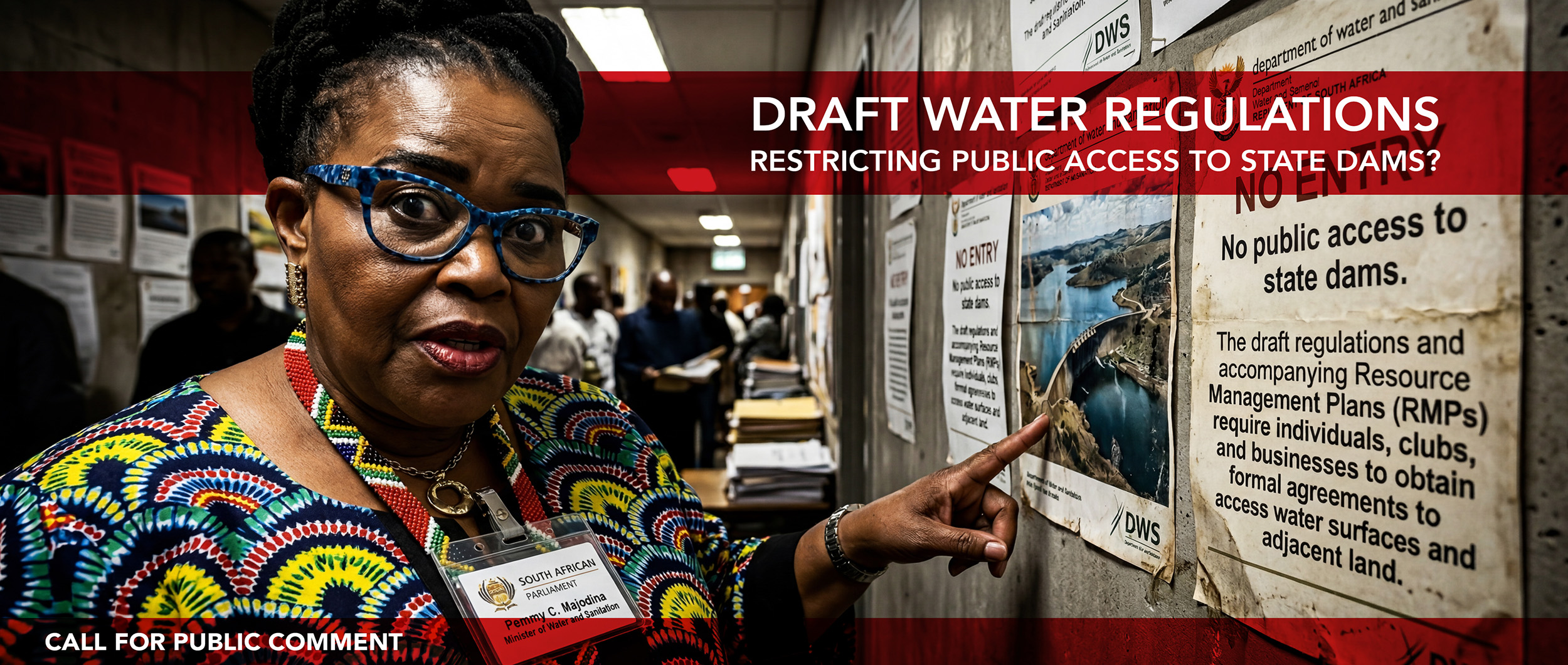
The Department of Water and Sanitation (DWS) has published draft Proposed Regulations for the Management of Government Waterworks and Surrounding State-owned Land.
The regulations and the accompanying Resource Management Plans (RMPs) would fundamentally change how the public, adjacent landowners and businesses may access and use state dams.
Update – 13 April: Following the high volume of public input, the Department of Water and Sanitation has issued a clarification and scheduled further public consultation meetings for 15, 16, and 20 April (links to the meetings available below). While the Department maintains that they do not intend to restrict access, the 10-year lease cap remains a core part of the proposal, effectively restricting access. We have included the Department’s full response and presentation below for your review.
click the link for more info, or scroll down to have your say
Have your say – shape the regulations.

Top concerns
This concern focuses on the proposed 9-year and 11-month cap on leases for state-owned land and servitudes. Because financial institutions typically require a 20-year term to secure a mortgage bond or business loan, these short-term leases make properties “unbankable.” This could lead to a significant drop in property values and prevent owners from securing the financing needed to maintain or improve their land.
Under the National Water Act, citizens currently have a right to “reasonable recreational use” of water. The new regulations suggest moving to a discretionary, permit-based system. This means traditional activities like fishing, boating, or swimming could be treated as a criminal offence unless a formal agreement is in place. Critics argue this turns a public right into a state-controlled privilege that is “paywalled” for ordinary citizens.
The draft regulations propose shifting the responsibility for monitoring, safety enforcement, and visitor record-keeping away from the Department and onto private citizens, clubs, and lessees. Stakeholders argue this is an unreasonable administrative burden, effectively forcing private individuals to act as unpaid “compliance officers” for the state without compensation or proper legal authority.
While the Department aims to standardise environmental protection (such as “wash bays” to prevent invasive species), there are concerns regarding the practicality and cost of these measures. This category covers debate on whether the proposed rules are the most effective way to protect water quality, or if they place an unfair burden on users while the state abdicates its own conservation duties.
Many local towns depend entirely on “dam tourism” (guest houses, marinas, and hospitality). If property values collapse due to lease issues or if recreational access is restricted, these local economies face a major threat. This concern highlights the potential for job losses in the service sector and a shrinking municipal tax base, which could lead to a decline in local infrastructure and services.
Perspectives: What is the debate?
The Department of Water and Sanitation (DWS) seeks to repeal the 1964 regulations and implement a new framework for managing state-owned land and waterworks (dams). The debate centres on how to balance the state’s duty to protect water resources and ensure equitable access with the existing rights of property owners, businesses, and recreational users.
Supporters of the regulations argue that the 1964 laws are outdated and that the new regulations will improve safety, protect the environment from invasive species, and ensure that dams are accessible to all South Africans, not just those with private shoreline access.
-
- Safety and Security: Standardised rules for boating, safety equipment, and incident reporting will make our dams safer for everyone.
- Environmental Protection: Mandatory “wash bays” and stricter controls will help prevent the spread of invasive plants and water pollution.
- Equity and Transformation: The policy aims to open up state-owned land for public picnic areas and community access, ensuring broader benefit.
- Formalisation: Replacing informal “handshake” agreements with formal leases ensures transparency and revenue for the state to maintain infrastructure.
Opponents of the regulations argue that the policy is a form of “regulatory overreach” that threatens local economies. They are concerned that short-term leases will make properties “unbankable,” and that the state is attempting to criminalise traditional recreational activities that are currently protected under the National Water Act.
-
- Economic Risk: Capping leases at ~10 years with no automatic renewal prevents owners from securing 20-year bonds, potentially collapsing property values and tourism.
- Infringement of Rights: The regulations seek to treat recreational use as a “privilege” to be paid for, rather than a “right” as established in the National Water Act.
- De Facto Expropriation: Claiming control of private land below the flood line without compensation undermines the security of title deeds.
- Administrative Burden: Shifting the state’s job of monitoring and enforcement onto private clubs and citizens is an unfair and impractical burden.