
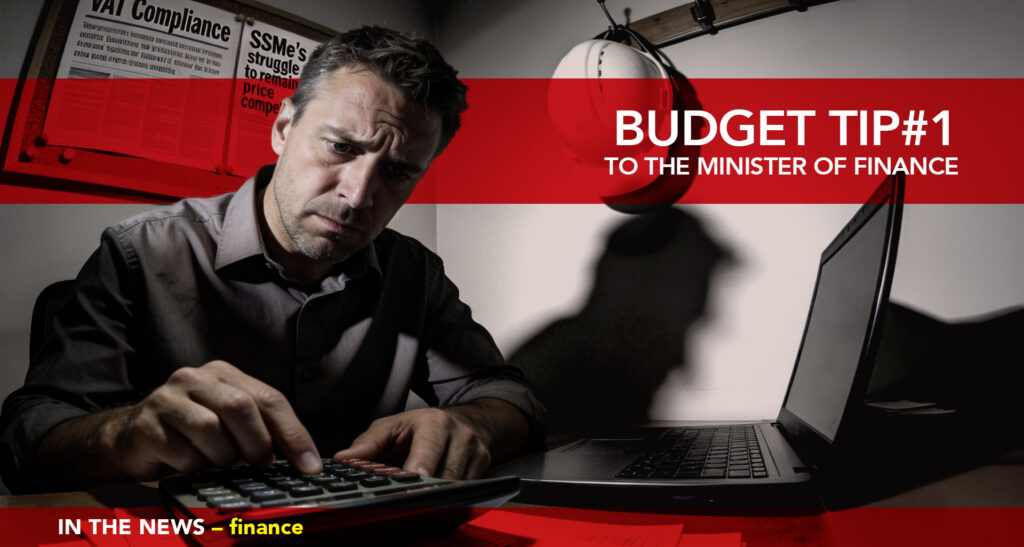
MY BUDGET TIP FOR THE MINISTER OF FINANCE
Proposal: Adjustment of the VAT Registration Threshold from R1 million to R2 million
1. Historical Context and Inflationary Correction
The compulsory VAT registration threshold has remained stagnant at R1 million since 2009. Over the past 17 years, the purchasing power of the Rand has diminished significantly. When adjusted for cumulative inflation, R1 million in 2009 is equivalent to over R2.3 million in today’s terms. By maintaining the status quo, the Treasury is effectively lowering the barrier for entry into the VAT system every year, capturing smaller and more vulnerable businesses that the original 2009 legislation intended to protect. A shift to R2 million is a vital correction to reflect current economic realities.
2. Protecting Thin Profit Margins
Small businesses operate in a highly competitive landscape where profit margins are often razor-thin. For a business turning over R1 million to R2 million annually, the administrative and financial weight of VAT compliance is disproportionately high. When these businesses are forced to register, they face a “lose-lose” scenario: raise prices and lose customers to informal competitors, or absorb the 15% cost and face insolvency. Lifting the threshold allows these SMMEs to remain price-competitive while they stabilise.
3. Reducing the Administrative and Compliance Burden
VAT compliance is not just a financial cost; it is a massive productivity drain. Small business owners are typically the primary operators, accountants, and administrators. The complexity of VAT filing—and the severe penalties for clerical errors—diverts essential focus away from growth and job creation. Increasing the threshold provides a “regulatory breathing room,” allowing businesses to scale their internal systems before taking on the complexities of the VAT net.
4. Preventing Business Failure and Supporting Job Creation
The “missing middle” of the South African economy—businesses attempting to transition from micro-enterprises to sustainable firms—frequently collapse at the current R1 million turnover mark. The sudden jump in compliance requirements is often the primary catalyst for failure. SMMEs are the backbone of employment in South Africa; by providing this relief, the Treasury incentivises formalisation without the immediate threat of administrative strangulation.
Conclusion:
In light of the high failure rate of small businesses and the nearly two decades of inflationary erosion, I urge the Minister to adjust the VAT threshold to R2 million. This is a practical, high-impact intervention that will safeguard the backbone of our economy and encourage sustainable growth.
Sincerely,
Robert Hutchinson, founder, DearSouthAfrica.co.za