
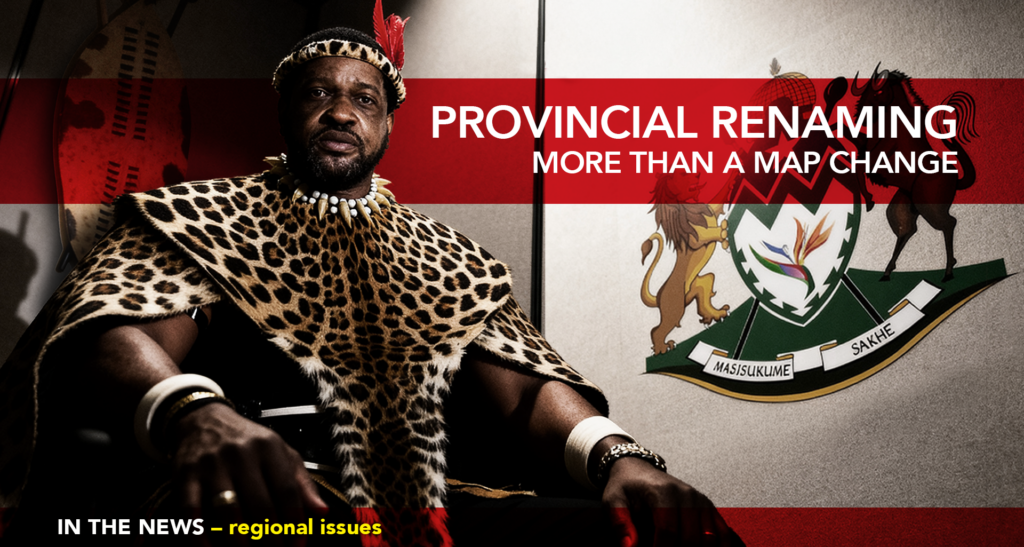
South Africa is currently witnessing a quiet but profound tug-of-war over its identity. On one side of the Drakensberg, King Misuzulu kaZwelithini has issued a royal call to strike “Natal” from the provincial lexicon, leaving us simply with KwaZulu. On the other side of the Hex River, the drumbeat for Cape Independence—the so-called “CapeXit”—has moved from the fringes of social media into the formal halls of Parliament.
At first glance, these are two separate regional issues. But look closer, and you’ll see they are symptoms of the same national ailment: a growing disillusionment with the “1994 Compromise” and a desire to redefine the boundaries of our belonging.
The King’s argument for “KwaZulu” is rooted in the restoration of dignity. “Natal,” a Portuguese word for “Christmas,” is a colonial timestamp. To many, the hyphen in KwaZulu-Natal is a scar—a forced marriage between a proud, indigenous kingdom and a colonial administrative block.
However, as those of us in the public participation space know, symbols carry weight. Renaming the province isn’t just a matter of changing stationery; it’s a jurisdictional statement. The Ingonyama Trust already holds 30% of the province’s land in a unique legal structure. By moving the name from “KZN” to “KwaZulu,” the monarchy is signaling a return to a pre-1994 identity—one where traditional authority holds a more central place in the modern state.
While KZN looks backward to reclaim a name, the Western Cape is looking outward to escape a system. The push for Cape Independence is fuelled by a different fire: the belief that the “one, sovereign, indivisible state” promised by our Constitution has failed to deliver on safety, infrastructure, and economic growth.
President Ramaphosa’s recent, firm rejection of a secession referendum in January 2026 highlights the constitutional wall. The law says we are one. The people in the streets of Cape Town and the hills of Zululand are increasingly asking: At what cost?
Whether we are debating a name change in the east or a border change in the west, the missing ingredient is the same: meaningful public participation. A provincial name change is not a royal decree, nor is secession a simple poll. Both require a fundamental shift in our “Social Contract.” According to our current standards, a name change requires a two-thirds majority in Parliament and a constitutional amendment. It requires every voice—from the AmaBhaca in uMzimkhulu who fear Zulu hegemony, to the suburbanites in Durban worried about the R100-million rebranding bill—to be heard.
If we allow these movements to become purely ethnic or purely secessionist, we risk the “Recrimination Nation” scenario—a country of fractured enclaves blaming one another for a collective decline.
The call to rename KZN and the call for Cape autonomy are both demands for recognition. They are a signal that the centralised, “one-size-fits-all” model of 1994 is straining under the weight of 2026. We don’t need to fear these debates, but we must demand that they happen within the light of transparent, rigorous public engagement.
If we are to drop the hyphen in our province names or rewrite the rules of our provinces, let it be because we found a better way to live together, not because we’ve finally given up on the idea of South Africa.
Robert Hutchinson, founder, Dear South Africa.